Mayo Clinic testing Israeli magnetic-heating technology as cancer treatment
Published in Business News
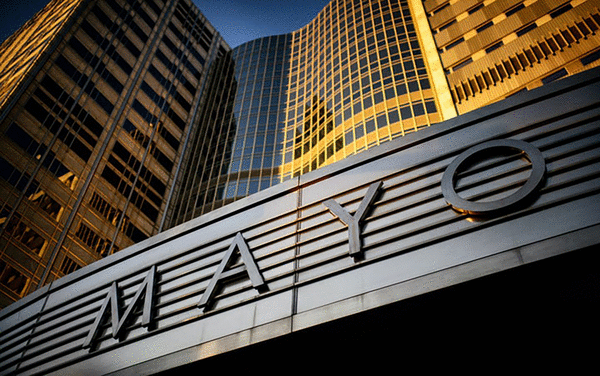
Anyone who has used an induction cooktop to boil noodles is halfway to understanding Mayo Clinic’s new experimental approach to killing cancer cells.
The Rochester-based health system announced Tuesday it is the first in the U.S. to test Israeli technology that targets solid tumors with fast-rising heat, or hyperthermia.
“Temperature is the Achilles’ heel of cancer,” said Dr. Scott Lester, the Mayo radiation oncologist leading a clinical trial to see if the technology is safe.
The challenge is in creating a therapy that focuses heat on cancer cells and doesn’t damage the rest of the body. New Phase Ltd. created a possible solution: to inject iron-containing nanoparticles that bind with cancer cells and make them identifiable targets for its magnetic-heating technology.
The encoded particles prevent overheating and keep the induced temperature at no more than 122 degrees. Induction cooktops can produce rapid heat and cause pots to quickly boil over, Lester said.
“We don’t want to do that inside of human beings,” he said. “What we want is a controlled amount of heating.”
Lester said this approach is novel, but doctors in Europe and Asia commonly use other forms of hyperthermia to treat cancer, a broad array of diseases involving irregular and unchecked growth of abnormal cells in the body. Mayo’s trial involves as many as 15 patients dealing with aggressive, end-stage cancers.
Mayo radiation oncologists two decades ago tried placing bags filled with hot water on the chests of women with breast cancer to augment the effects of surgeries or radiation treatments.
“There were times it was very successful,” said Dr. Nadia Laack, Mayo’s chairwoman of radiation oncology, but oncologists abandoned the approach because the heating level was irregular and sometimes painful.
Other approaches include placing people under heated blankets or in warm baths to raise their overall body temperatures. Doctors also have threaded needle-like probes directly into solid tumors to blast them with radio waves that create high heat.
Common treatment for solid tumors involves removing them through surgery, poisoning them with chemotherapy drugs or radiation or coaxing the immune system to identify and eliminate the tumors.
Mayo’s key research questions are whether this magnetic-heating approach has an impact on cancer by itself or whether it works best in combination with existing treatments. Mayo’s study will focus on solid, stage-four tumors, which means tumors that have spread well beyond the organs or tissues where they originated. The Israeli company is funding Mayo’s trial.
The American Cancer Society last month hailed a milestone: 70% of Americans diagnosed with cancer from 2015-21 survived five years or longer. But the survival odds drop significantly when cancers had spread and reached stage four before diagnosis.
The latest data showed Minnesota with an elevated cancer rate in its population but a death rate below the national average. Both trends reflect elevated screening rates in Minnesota that identify more cancers and result in more early treatment.
The state still loses more than 10,000 people each year to cancer, making it the leading cause of death in the state.
©2026 The Minnesota Star Tribune. Visit at startribune.com. Distributed by Tribune Content Agency, LLC.









Comments