Crowded hedge fund trades are unwinding fast after ugly October
Published in Business News
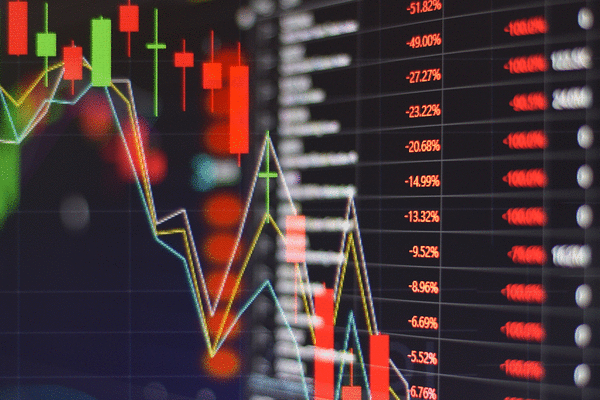
First the AI whiz kids were humbled. Then came the macro shocks. Credit scares followed.
Soon, nowhere would be safe for hedge funds. Pain cascaded across the industry in October, as a broad tech selloff collided with a shock election in Brazil and violent protests in France, bruising many of the world’s sharpest money managers.
Walleye Capital is returning some cash following its worst monthly performance since March 2020. Greg Coffey’s macro shop, Kirkoswald Asset Management, recorded its worst-ever monthly decline, breaking a 16-month winning streak. And credit fund Arini Capital Management, one of Europe’s fastest-growing hedge funds, lost more than 12% last month alone — on track for its first annual loss since inception.
For an industry premised on making money no matter the direction of the market, the breadth of the damage is stunning. Strategies designed to behave independently suddenly lost money in lockstep, exposing crowded positions, heavy leverage and vulnerabilities that had been easier to overlook during the long ascent of AI-linked stocks.
Then, on Thursday, any hopes that October was merely one brutal month were dashed in a flash. Markets tumbled across the board, with a selloff in chipmaker stocks dragging down the Nasdaq 100 by 6.4%, its biggest decline since March 2020. The S&P 500 tumbled 4.4%.
“These kinds of swings — violently up and down — are like being attacked in a parking lot by three thugs,” said hedge fund coach Denise Shull, who had multiple clients cancel appoints Thursday owing to the market chaos. “Your instinct is to fight back, and in some ways you have to — just long enough to find an opening to run.”
Even goliaths of the hedge fund industry are reeling. ExodusPoint Capital Management fell 2.4% last month, paring its gains this year to 1.6%. Balyasny Asset Management dropped 3.4% in October, leaving it with a 2026 loss of 2.7%.
Izzy Englander’s Millennium Management slid 2.3% in last month, shrinking its year-to-date gain to 5.7%. The $95 billion firm is pulling more than $1.5 billion of leveraged cash from two external hedge funds, Troluce Capital Advisors and Axebrook Capital, in response to losses at both firms, Bloomberg reported.
The pain drove Engineers Gate, the quantitative hedge fund run by Greg Eisner, to part ways with most of a team accounting for sizable slice of its assets this week. The group mixed systematic investing with fundamental analysis — but after an 18-month run, its performance was just not good enough, Eisner wrote in a note to clients.
Eisner laid bare a dynamic increasingly vexing the world of multi-manager hedge funds: correlation. Despite employing pods of traders using a variety of strategies, the funds keep rushing out of the same trades at the same time during periods of market stress, exacerbating losses. Those are precisely the moments when Engineers Gate wants to be positioned differently, Eisner wrote.
“The real danger isn’t the market selloff itself, but the illusion of diversification across hedge funds,” said Bruno Schneller, managing partner at multifamily office Erlen Capital Management. “I suspect the bigger risk is still ahead: As losses mount, risk managers may force funds to cut exposure, potentially triggering another wave of selling regardless of fundamentals.”
The pressure could spread from the most crowded trades to otherwise healthy positions as funds rush to raise cash, Schneller said. Even relatively high-profile funds with sound investment theses could be at risk because their positioning and leverage leave little room to maneuver, he added.
It had been a turbulent year even before the October mayhem. Funds known for their steady returns lost money in March as the war in the Middle East roiled markets across energy, bonds and equities. In July, an AI stock rout took hold that nearly toppled wunderkind Leopold Aschenbrenner and his hedge fund, Situational Awareness. Other AI-focused hedge funds took a fresh beating last month. Value Aligned Research Advisors, which has operated a portfolio similar to Situational Awareness, plunged 33%.
Ken Griffin’s Citadel made the most of the turmoil over the summer, buying a big chunk of Aschenbrenner’s AI stocks. It helped push Citadel’s flagship fund 5.9% higher in July.
Citadel’s Wellington has remained one of very few winners more recently, too. The fund gained 1.7% last month, pushing its year-to-date gain to 15.3%. Elsewhere, D.E. Shaw’s Composite fund, a mix of computer and human-guided trading, rose 0.7% in October and was up 16% for the year. And a total outlier, the $8.2 billion Quantedge fund, advanced 7.2% in the period, boosting its gain for the year to 60%.
The same cannot be said for a variety of stock-pickers. The equity portfolio at D1 Capital Partners dropped 4.4% in October, paring its year-to-date gains to 18.8%. Whale Rock Capital Management’s flagship public-privates fund tumbled about 8%, leaving it up 34% for the year.
For a moment this week, it looked as if the clouds were parting. The S&P 500 powered higher Wednesday after Democrats’ strong performance in the US midterm elections. But the mood quickly turned sour as investors digested the possibility that worsening AI sentiment could upend the trade that has been carrying the market for the past three years.
As stocks plummeted Thursday, clients hammered Goldman Sachs Group Inc.’s stock-trading desk for crumbs of insight about how far the selloff could go.
“Our phones are exploding with asks for color,” John Flood, the bank’s head of Americas equities execution services, wrote in a note to clients. “Unfortunately we aren’t seeing much.”
(With assistance from Justina Lee.)
©2026 Bloomberg L.P. Visit bloomberg.com. Distributed by Tribune Content Agency, LLC.






Comments