FCC takes aim at talk shows in fight over 'equal time' rules for politicians
Published in News & Features
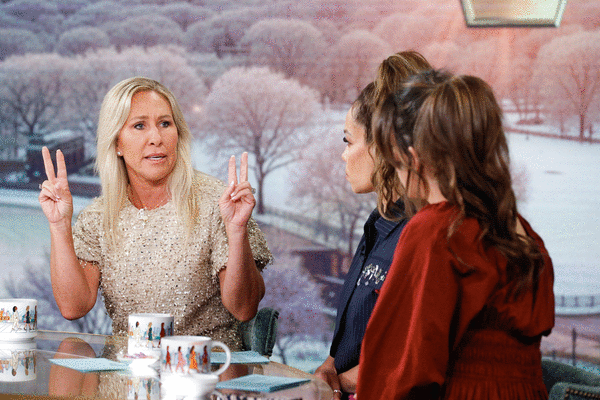
The Federal Communications Commission is taking aim at broadcast networks' late-night and daytime talk shows, including ABC's "The View," which often feature politicians as guests.
On Wednesday, the FCC's Media Bureau issued a public notice saying broadcast TV stations would be obligated to provide equal time to an opposing political candidate if an appearance by a politician falls short of a "bona fide news" event.
For years, hosts of "The View," ABC's "Jimmy Kimmel Live!" and CBS' "The Late Show with Stephen Colbert," have freely parried with high-profile politicians without worrying about being subjected to the so-called "equal time" rule, which requires broadcasters to bring on a politician's rival to provide balanced coverage and multiple viewpoints.
With the new guidance, the FCC appears to take a dim view of whether late-night and daytime talk shows deserve an exemption from the "equal time" rules for stations that transmit programming over the public airwaves. The move comes amid FCC Chairman Brendan Carr's campaign to challenge broadcast networks ABC, CBS and NBC in an effort to shift more power to local broadcasters, including conservative-leaning television station groups such as Nexstar Media Group and Sinclair Broadcast Group.
Since becoming chairman of the FCC a year ago, the President Trump appointee has been critical of CBS, NBCUniversal and Walt Disney Co. He launched investigations into Disney and Comcast's diversity hiring practices and reopened a "news distortion" probe into CBS' edits of a 2024 "60 Minutes" interview with then-Vice President Kamala Harris after Trump sued the network for more than $10 billion.
Carr withheld approval of CBS parent Paramount's sale to billionaire scion David Ellison's Skydance until after Paramount agreed to pay Trump $16 million to settle the suit, which several legal observers had deemed frivolous.
During a social media storm over Kimmel's comments in the wake of the killing of conservative activist Charlie Kirk in September, Carr suggested the FCC might use its regulatory hammer over ABC parent Walt Disney Co. if the Burbank giant failed to take action against Kimmel. "We can do this the easy way or the hard way," Carr said at the time.
The FCC oversees television station broadcast licenses, and those stations have obligations to serve the public interest.
On Wednesday, the FCC rolled out the new guidance aimed at late-night talk shows and "The View," saying there's a difference between a "bona fide news interview" and partisan politics.
"A program that is motivated by partisan purposes, for example, would not be entitled to an exemption under longstanding FCC precedent," the Media Bureau said in its unsigned four-page document.
The bureau encouraged broadcasters to seek an opinion from the FCC to make sure their shows were in compliance — an advisory that will likely raise anxiety and potentially prompt some TV station groups to scrutinize shows that delve deeply into politics.
ABC, CBS and NBC declined to comment.
Since Trump returned to the White House a year ago, the FCC has stepped up its involvement in overseeing content — a departure from past practice.
Trump has made no secret of his disdain for Kimmel, Colbert, NBC comedian Seth Meyers and various hosts of "The View."
Recently, "The View" featured former U.S. Rep. Marjorie Taylor Greene, once a Trump acolyte, who has become a fierce critic of the president.
Daniel Suhr, president of the conservative Center for American Rights, applauded the FCC move in a statement.
"This important action puts Hollywood hosts and network executives on notice — they can no longer shower Democrats with free airtime while shutting out Republicans," Suhr said. The organization has lodged several complaints with the FCC about alleged media bias.
Anna M. Gomez, the lone Democrat on the three-person commission, quickly blasted the move.
"For decades, the Commission has recognized that bona fide news interviews, late-night programs, and daytime news shows are entitled to editorial discretion based on newsworthiness, not political favoritism," Gomez said. "This announcement therefore does not change the law, but it does represent an escalation in this FCC's ongoing campaign to censor and control speech."
"The 1st Amendment does not yield to government intimidation," she said. "Broadcasters should not feel pressured to water down, sanitize or avoid critical coverage out of fear of regulatory retaliation."
The precedent was established in 2006, when the FCC determined that then-NBC late-night host Jay Leno's "Tonight Show" interview with actor Arnold Schwarzenegger, who announced his bid for California governor, was a "bona fide" news event, and thus not subject to the FCC rule.
The FCC said that station groups need not rely on that 2006 decision because the agency "has not been presented with any evidence that the interview portion of any late night or daytime television talk show program on air presently would qualify" for such an exemption.
The FCC's guidance does not apply to cable news programs — only shows that run on broadcast television, which is subject to FCC enforcement actions.
_____
©2026 Los Angeles Times. Visit latimes.com. Distributed by Tribune Content Agency, LLC.


Comments