Massachusetts power outages soar past 275,000 as blizzard wreaks havoc along coast, Cape Cod
Published in News & Features
BOSTON — More than a quarter-million Massachusetts residents are without power this hour! That exact total is 275,202, according to the MEMA database.
Cape Cod is hit the hardest … and I’m hitting save as winds whip just outside my window.
The MEMA outage database now lists Falmouth as the worst in the state at 23,104 in the dark.
Plymouth is next with 22,600 without power. That’s a jump from the hour before, but we haven’t hit the apex yet.
Barnstable has 21,000-plus, Dennis 14,000 and climbing. The Cape is not the place to be today. Bourne, Brewster, Orleans, Mashpee, Nantucket, and Eastham all have thousands of customers without power. That is a big jump from this morning.
On the South Shore, Quincy has 3,708 in the dark, with Marshfield now surpassing that tally with 6,056 outages.
On the North Shore, Gloucester has just made the list at 2,478 with no lights or heat.
The entire town of Hamilton is reportedly without power, with more than 3,000 outages listed. Just inland near Manchester-by-the-Sea, the Essex county town, like the rest of us, is in the grip of this blizzard that’s going to hang around all day, forecasters say.
Boston has hit the list with 1,663 without power, the Massachusetts Emergency Management Agency reports. The database represents power outages for four power companies in the state.
Tewksbury has about 100 homes or businesses, and Lowell less than that, without power after 11 a.m.
Stay inside, if you can
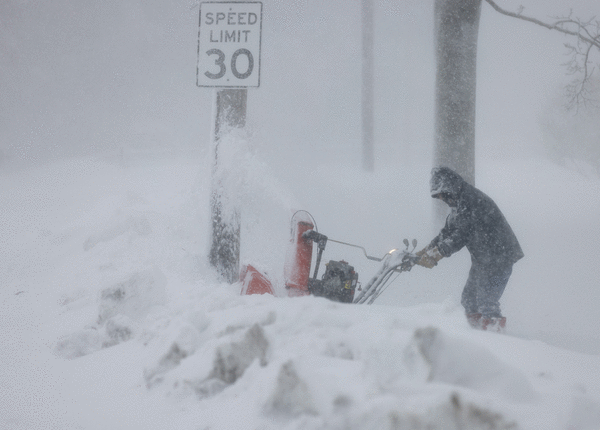
The Boston Public Works division is reporting what all the forecasters are saying — this is the meat of this nor’easter. The best bet is to hunker down and wait it out. “High winds and heavy snow are causing whiteout conditions. Please stay home & avoid the roads,” the DPW pleads.
Blizzard warning extended
The entire state is now under a blizzard warning, in case anyone in Western Massachusetts was feeling left out. Rhode Isalnd and Connecticut are also being hammered, as this line of heavy snow has now dropped close to a foot and more outside our doors. Foxboro is reporting 21.5 inches of snow.
Hurricane-force winds
Wellfleet is reporting in with 77 mph, Category 1 hurricane winds. Police report on Facebook that they are witnessing “severe damage to powerlines and trees,” and the “roads are impassable.”
As you can see below, this monster is churning just off our coast.
A foot of snow
For those remembering 2015, this snowfall is heading that way! On a personal note, that’s the year I herniated a disc in my lower back trying to shovel this brand of heavy-wet-cement-like snow. It ain’t a picnic recovering from that type of injury. Best bet is to go slow or pay a neighborhood kid or someone with a snowblower to help you out.
These snow totals are heading toward 2 feet. Be back with the latest. (No, I only shoveled a bit. I’m weighing my options for the time being.)
Thundersnow
That rare winter phenomenon has hit Plymouth, the epicenter of this blizzard, it appears. Our longtime Weather Channel stormchaser Jim Cantore just heard the crackle and boom right where he’s posted in Plymouth.
Back to backs
Just into the Herald inbox is a timely warning from UNH about this bombogenesis blizzard and what it will do to your back. Dain LaRoche, professor of kinesiology and associate dean for research at UNH, shares tips on how to shovel out:
The Shovel:
The shovel head should be kept as close to the body as possible to reduce impact on the lower back.
Try to keep the torso as vertical as possible and lift with the legs.
Ergonomic shovels that have a bend allow the shovel head to be closer to ground and can help minimize bending.
How to Shovel:
Pushing snow is better than lifting.
Avoid twisting to throw snow sideways, try to shovel snow straight ahead.
Try to minimize how high you lift the snow which can increase the workload on back and shoulders. Avoid lifting above the waist.
Swap arms periodically to distribute the weight across the body’s muscles.
Taking smaller shovel loads will reduce the muscular load over time.
Wet snow is significantly heavier than fluffy dry snow so take smaller ‘bites’ on the shovel to keep the load manageable.
Warm up:
Ease into shoveling until muscles warm up — muscles and tendons are less elastic when cold and may be more susceptible to injury.
Wearing proper clothing is important to prevent overheating, sweating and causing additional strain on the cardiovascular system. Layer and remove layers as you get warm, put them back on if you get cold.
Take a Break:
Be sure to take breaks. If there is a lot to shovel, break it up into sections. Stop when feeling fatigued, strained or weak – when mechanics might be compromised.
Heed Heart Warnings:
Stop shoveling If you feel lightheaded, have chest pains, irregular heartbeat, dizziness, shortness of breath, joint pain or other significant discomfort. Shoveling is heavy work that people may not be used to and can cause increased stress on heart, lungs and muscles.
-----------
©2026 MediaNews Group, Inc. Visit at bostonherald.com. Distributed by Tribune Content Agency, LLC.






Comments