Maryland House advances sweeping energy package hours ahead of session end
Published in News & Features
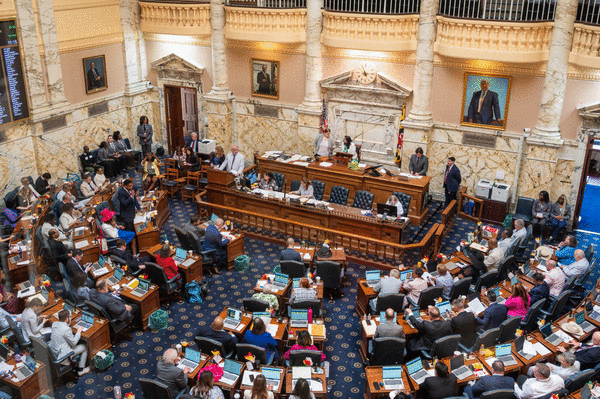
In a 105–27 vote, the Maryland House of Delegates on Monday approved a sweeping energy package aimed at rising utility costs and surging electricity demand, marking lawmakers’ most comprehensive response this session.
The bill now moves to the Senate, where lawmakers face a tight deadline — just hours before the General Assembly’s 11:59 p.m. deadline — to pass the more than 200-page bill.
“Maryland families have been hammered … by the skyrocketing cost of home energy,” House Speaker Joseline Peña-Melnyk said, adding the package delivers immediate relief while pursuing long-term reforms.
The vote followed more than two hours of debate on the conference committee report, which can only be accepted or rejected under state law. It capped weeks of negotiations over how aggressively to lower electric bills, regulate fast-growing data centers and balance short-term relief with long-term planning.
The final compromise pulls back from more aggressive proposals floated earlier — such as banning forecast test years and altering natural gas hookup costs — and instead relies on temporary pauses, regulatory studies and narrower policy changes. Much of the focus is on how utilities set rates and how the state prepares for increased demand from large energy users.
House Republicans criticized the outcome, adding that opposing ideas were sidelined. “It was pretty obvious that unless you were a green energy activist, your ideas were not welcome in the final product of this bill,” House Minority Leader Jason Buckel said.
Still, some House Republicans voted yes on the bill.
Is it enough, lawmakers ask
Monday’s debate underscored a central divide: whether incremental relief and structural reforms are sufficient to address voter frustration.
Environment and Transportation Chair Marc Korman defended the bill, citing estimated savings of at least $150 annually per ratepayer, with additional potential savings tied to rate-setting changes, new tariffs for large users and incentives for in-state generation.
He said the legislation addresses “short, medium and long-term challenges” behind Maryland’s energy crunch.
Republicans countered that the bill falls short. Maryland families are getting crushed, crushed,” said Del. Brian Chisholm, an Anne Arundel Republican. Del. Lauren Arikan, a Harford County Republican, warned lawmakers would face the same issue next year once voters realize the measure “is sadly not going to bring real substantive positive effects on the bottom line.”
Republican Del. Nino Mangione, however, said even modest savings would help constituents, calling the immediate relief meaningful despite broader concerns.
Rollout draws criticism
The House vote came shortly after Gov. Wes Moore and Democratic leaders promoted the compromise as a major affordability measure — even though the final bill text wasn’t publicly available yet.
Moore said the legislation would save families “hundreds of dollars,” require data centers to fund grid upgrades, and create a low-income assistance program worth up to $1,400 annually for eligible households.
Senate President Bill Ferguson acknowledged limits to state control over energy costs but said the bill uses all available tools to reduce bills, prevent future increases and help Marylanders so that “none of our residents are forced to choose between keeping the lights on and paying for their medication.”
Republicans quickly criticized the rollout in an impromptu news conference. Buckel called it “an election-year game,” while Senate Minority Leader Steve Hershey said the bill offers only modest relief after months of debate, arguing GOP proposals would have delivered more substantial long-term savings.
The Senate must now decide whether to give the measure final approval before adjournment.
_________
©2026 The Baltimore Sun. Visit at baltimoresun.com. Distributed by Tribune Content Agency, LLC.






Comments