Dengue fever and other mosquito-borne illnesses surging in Florida
Published in News & Features
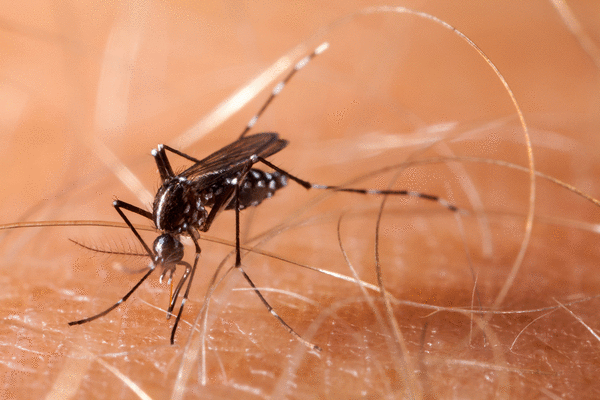
Mosquito bites can be more than a nuisance this summer — they can make you sick.
Florida has become a hotbed for mosquito-borne dieases, reporting hundreds of cases of dengue fever, chikungunya fever, and even West Nile virus.
The state leads the nation in dengue cases this year with 270 reported. Increasingly, residents aren’t just acquiring the virus while traveling abroad — they are getting bitten right at home. Mosquito control experts note that peak dengue season runs from July through September.
As many as 111 people as of early September have contracted locally acquired dengue in six Florida counties this year. While eight of these cases were in Miami-Dade and Palm Beach counties, a striking 95 occurred in Hillsborough County, where mosquito control teams are working overtime and ramping up spraying. The death of an 80-year-old South Tampa woman may be linked to a dengue infection.
Symptoms and severity
A common dengue symptom is a sudden high fever starting four to 10 days after a bite, followed by a skin rash a few days later. Treatment is limited to rest, fluids, and pain relievers.
“There is no cure or antiviral medications for dengue,” said Dr. Rana Chakraborty, division chief in Pediatric Infectious Diseases at the University of Miami.
Many infected individuals remain completely unaware.
“A lot of people can get bitten, acquire dengue, and nothing happens to them,” Chakraborty said. “Only a fraction have symptoms.”
For about 1 in 20 people, dengue progresses to a severe level — triggering repeated vomiting, nosebleeds, stomach pain, and organ failure — often requiring hospitalization.
Local surveillance
While many species of mosquito inhabit Florida, only two transmit dengue: Aedes aegypti and Aedes albopictus. Recognizable by their dark bodies and distinct white-striped legs, these daytime biters peak just after sunrise and before sunset. They also transmit Zika, yellow fever, and chikungunya.
County workers across the state are battling populations by setting traps in parks and neighborhoods, focusing heavily on areas with confirmed cases:
• Palm Beach County (currently under a mosquito-borne illness advisory): Stepped up surveillance and prevention efforts.
• Miami-Dade County (under a mosquito-borne illness alert): Added wastewater surveillance to track virus spread.
• Broward County: Operates a robust surveillance, trapping, and targeted spraying program using patented technology.
“We are working with the Department of Health and every time we have a suspected case of dengue, they contact us, and we spray heavily around the blocks that could be impacted,” said Adriana Toro, Broward County’s assistant director of mosquito control.
Toro noted that while travel-related cases are unavoidable, Broward has successfully controlled local transmission using patented turbine technology to spray large areas and test mosquito-breeding drains.
“We have been proactive on the preventive side instead of waiting for an outbreak,” Toro said.
Travel and mosquito-borne illnesses
Frequent global travel significantly drives case numbers. So far this year, 160 Floridians contracted dengue after traveling to endemic areas — most frequently Cuba. Mosquito experts point to hotter summers and increased rainfall as additional contributing factors.
Beyond dengue, Florida has reported 60 travel-related cases of chikungunya fever, as well as two locally acquired human cases of West Nile virus in Alachua and Walton counties.
“It is smart — especially around dawn and dusk — to have EPA-registered repellent on exposed areas of your body,” Chakraborty said.
Chakraborty added that Miami-Dade’s wastewater sampling aids proactive monitoring, anticipating additional cases as post-summer travel resumes.
Prevention and protection
Public health officials are urging residents to take immediate preventive action.
“Use insect repellent, cover up when possible, and remove standing water around your home. Individual prevention helps protect you and your community,” the Florida Department of Health has urged.
Pet owners can breathe a slight sigh of relief regarding their animals. Even if bitten by an infected mosquito, pets generally do not develop dengue fever. Toro noted: “It is typically just transmitted to humans.”
________
©2026 South Florida Sun Sentinel. Visit at sun-sentinel.com. Distributed by Tribune Content Agency, LLC.






Comments