Key Bridge collapse: Maryland launches dashboard to track rebuild progress
Published in News & Features
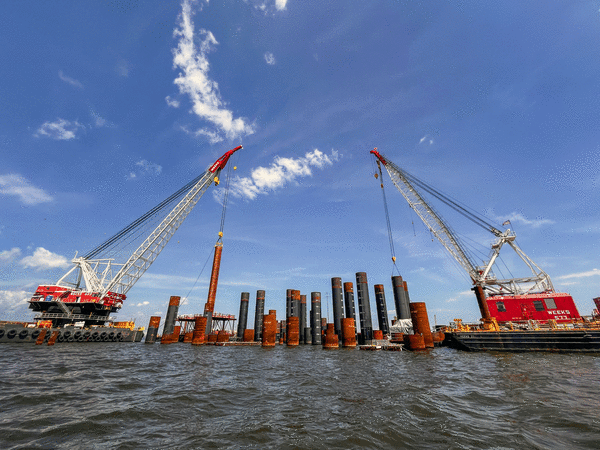
BALTIMORE — Maryland transportation officials are rolling out a new public dashboard to help visualize the progress of the Francis Scott Key Bridge rebuild.
The dashboard, available at KeyBridgeRebuild.com, will be updated monthly to show the status of ongoing construction efforts, including the installation of permanent pile foundations for the two main piers of the future bridge and temporary work platforms, or trestles.
“We know that residents are eager to understand how the new bridge is being built,” Maryland Transportation Secretary Katie Thomson said on a call with reporters Friday. “They want and they have asked for more information, because this project means so much to them and the surrounding area.”
So far, the state has spent more than $600 million on the rebuild, with the money largely coming from insurance proceeds and federal funding, said Bruce Gartner, executive director of the Maryland Transportation Authority. The state has received more than $517 million, with another $2.1 billion available from litigation. The dashboard does not currently track spending.
But the spending until now is only a fraction of the total projected cost to replace the bridge — as of August, state transportation officials were holding firm on estimates between $4.3 billion and $5.2 billion.
As of Friday, the north and south trestles, which give workers access to the bridge piers from land, are 99% complete, according to the dashboard. Workers are more than halfway done installing permanent pile foundations on the south pylon, while piles for the north pylon are about 26% complete. Both sets of permanent piles are expected to be finished by next spring.
Also included in the dashboard is the status of the four separate construction contracts being pursued to finish the remaining work — a move that came after state officials parted ways with Kiewit Infrastructure, the original design-build contractor, in April after being unable to agree on a price for the next phase of construction.
The state advertised a request for qualifications in July for the largest of the four contracts, which includes construction of the main span of the cable-stayed bridge, marine approaches and a vessel collision protection system. In August, it also opened bidding for a contract to demolish the remaining portions of the old bridge and other marine work.
State officials are aiming to open the new bridge to traffic by the end of 2030.
-------------
©2026 The Baltimore Sun. Visit at baltimoresun.com. Distributed by Tribune Content Agency, LLC.






Comments