Judge blocks federal agents from questioning Californians on 'flawed' voter lists
Published in News & Features
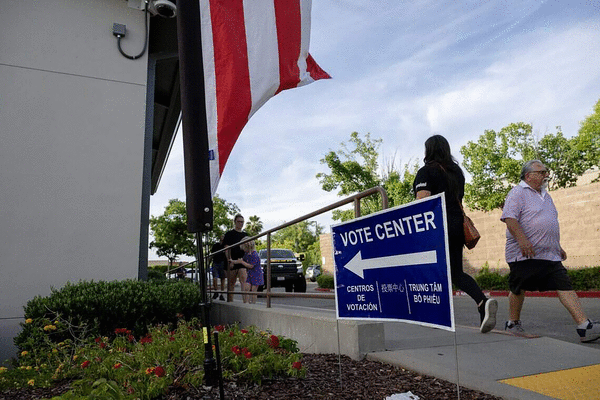
The Trump administration must stop sending armed agents to question immigrants it believes may have registered to vote illegally until after the Nov. 3 midterm elections, a federal judge in Oakland, California, has ruled.
The preliminary injunction issued late Wednesday by U.S. District Judge Araceli Martinez-Olguin is the latest development in a growing number of legal cases involving lists compiled by the federal government that it says indicate thousands of noncitizens may be registered to vote in California and other states.
In her order issuing the injunction, Martinez-Olguin questioned the data the government used to create its lists and said allowing field operations by the Department of Homeland Security’s investigative arm to continue in the days leading up to the election could include U.S. citizens and amount to voter intimidation.
“At issue here is the reliance on admittedly flawed and incomplete data to create a list of individuals for (Homeland Security Investigations) to interview in the months leading up to an election,” Martinez-Olguin wrote, “including the roll-out of a social media campaign publishing photos and videos of individuals being arrested for ‘unlawfully registering to vote in California.’”
The administration’s lists were also used this week in connection with criminal charges against 28 lawful residents of California. A separate lawsuit, filed last week by the administration against the state, seeks to force California to set aside ballots from about 20,000 individuals whose names are on the lists.
The lists were developed using a combination of government and commercial databases, and federal officials have said they may include the names of U.S. citizens who are eligible to vote.
The effort to find noncitizens who are registered to vote stems from President Donald Trump’s unproven claim that the 2020 presidential election won by Joe Biden was “stolen” from him, as well as long-standing efforts by Republicans to require voters to provide proof of citizenship.
The Oakland federal court case before Martinez-Olguin was filed by a voting rights group, a large labor union and the cities of San Francisco and Santa Clara, which alleged that the lists were being used to intimidate voters in California and eight other states.
By going to people’s homes and then publicizing their interviews and arrests on social media, Homeland Security Investigations agents were creating an atmosphere of fear in the days leading up to the November elections, in violation of the federal Voting Rights Act, the plaintiffs argued. They include the California Nurses Association and its national parent, and the Voto Latino Foundation.
In her ruling, Martinez-Olguin barred the government from conducting what court documents described as a “surge” in such activity in nine states, including California, until after the polls close on Election Day.
Pausing interrogations based on the lists does not prevent the government from conducting legitimate investigations of potential voter fraud, Martinez-Olguin said.
She also said the federal government “has a vested interest in free elections untainted by the threat that officers will dissuade voter engagement programs from conducting their core civic functions.”
The order was welcomed by the voting rights group Protect Democracy Project, whose lawyers are representing the unions.
“The judge’s analysis is thoughtful and clear and reasoned — that the data and the processes that the government is using to generate these lists of purported unlawful voters is so fundamentally flawed and unreliable that it cannot serve as the basis of any sort of legitimate investigation,” said lead attorney Beau Tremitiere.
The order will not take effect until Friday evening, giving the government time to appeal.
As of Thursday morning, a notice of appeal had not been filed, and the Justice Department’s lead attorney in the case did not immediately respond to a request for comment.
____
©2026 The Sacramento Bee. Visit at sacbee.com. Distributed by Tribune Content Agency, LLC.





Comments