Southern California's Metrolink suspends iconic coastal route due to high tides
Published in News & Features
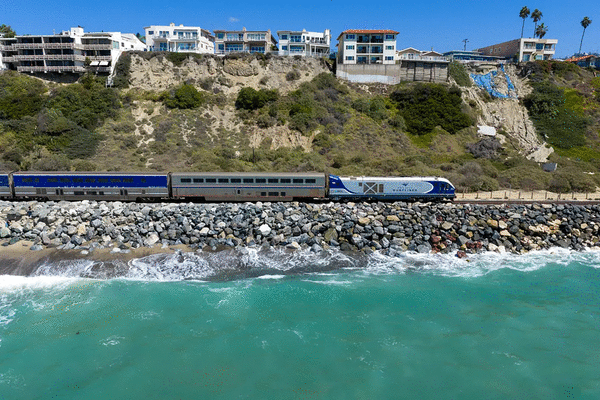
LOS ANGELES — Metrolink announced it will temporarily suspend service in Southern Orange County, where the train runs along the coastline, during the last week of October as forecasts call for high tides.
Amtrak’s iconic Pacific Surfliner, which connects Orange County to San Diego, and offers picturesque ocean views, has long been under threat from coastal erosion.
Washout risks, high surf and erosion have closed the rail line for days over the summer. Last year, the line was closed for a month for repairs designed to protect it against landslides.
This time, Metrolink officials say services will be suspended from Oct. 26 through Oct. 30 for Laguna Niguel/Mission Viejo and Oceanside stations. Metrolink said it will not provide alternate bus transportation will not be provided at this time.
The temporary suspension is intended to minimize the potential for widespread delays and cancellations if coastal conditions disrupt rail operations, Metrolink said.
“By originating and terminating Orange County Line trains at Laguna Niguel/Mission Viejo, Metrolink can maintain a more predictable schedule for customers across the system,” Metrolink said in a statement.
“This shift will also reduce competing rail traffic and shorten potential weather-related delays for other carriers, including Amtrak Pacific Surfliner and freight trains, that operate along the beachfront corridor near San Clemente.”
Orange County officials caution that predictions of an intense El Niño this winter could create even more challenges for the rail line.
The Orange County Transportation Authority — which manages the land under part of the Surfliner’s route — has identified hot spots of significant concern along the coast that need improvement, including maintaining the sand and boulders that help buffer the tracks from the surf.
The agency secured $308 million in state and federal emergency funding to begin but hasn’t been able to secure all of the permits from the California Coastal Commission, the California State Lands Commission and the Army Corps of Engineers in time to complete the work.
The Coastal Commission said in a statement that it issued multiple permits for the OCTA to do sand replenishment, including an emergency permit on Sept. 22 “to address future damage to the (Los Angeles to San Diego) corridor and streamline the emergency permitting and emergency response.”
©2026 Los Angeles Times. Visit at latimes.com. Distributed by Tribune Content Agency, LLC.






Comments