Lula rallies his supporters for one last comeback, or a final goodbye
Published in News & Features
Luiz Inácio Lula da Silva wasn’t going down without a fight. And his fans weren’t ready to give up on him. Here, marching down Sao Paulo’s most iconic avenue, they were bearing witness to what may turn out to be the last rally by the most defining figure of Latin America’s left.
On Saturday, hours before Brazilians headed to the polls to choose their next leader, the 80-year-old president drew hundreds of thousands to show up for him. It was a sea of red-clad supporters that were chanting, dancing and raising their hands in the air to form the letter L, all for a man who’s been at the center of the nation’s politics for the past four decades.
Was this last campaign stop a bittersweet farewell or setting the stage for the unlikeliest of miraculous comebacks from a defiant incumbent who is refusing to call time? First elected in 2002, Lula has run for president seven times.
He is attempting to secure an unprecedented fourth and final mandate on Sunday, even with the odds stacked against him. That drive was on display as Lula rode a slow-moving soundtruck down a 3-kilometer street that serves as a cultural landmark, a symbol of the country’s economic transformation and also the scene for some of its biggest protests.
Voting began at 8 a.m. local time and booths close at 5 p.m. with almost 160 million Brazilians eligible to vote. The final polls show his rival Flávio Bolsonaro has the edge, though they also suggest the incumbent has gained some momentum after unexpectedly losing the first round to the right-wing senator on Oct. 4. Bolsonaro had 51% to Lula’s 49% in an AtlasIntel survey for Bloomberg News on Saturday, and others showed similar splits.
Avenida Paulista has long been a rite of passage for those aspiring to the highest office in the land — but also a stage for political, even violent, dissent. It was the location of the biggest demonstrations for the impeachment of Dilma Rousseff as well as the protesting of the botched response to the pandemic by Jair Bolsonaro, Flávio’s father.
And on the eve of the second round, it was the culmination of Lula’s attempt at a revival, which saw the lifelong technophobe get a mobile phone to reach a wider audience after his first-round setback.
“Opening my phone was motivating, not discouraging,” Lula wrote on election day morning in an opinion column in Brazilian daily newspaper Folha de S.Paulo. “But it was on the streets — across the length and breadth of the country — that we truly captured people’s hearts.”
Bolsonaro emerged from the first round as the clear favorite, and followed it up with a slew of endorsements from political parties that had previously remained neutral.
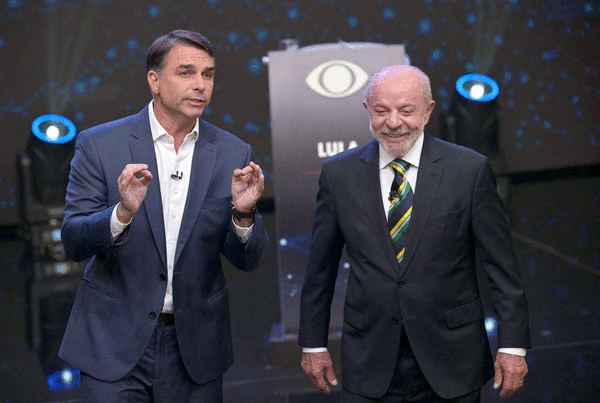
He’s since exuded the confidence of a president-elect, an attitude that was on display during the race’s final debate Friday night. Bolsonaro made a mocking comment about Lula only having nine fingers, a tone-deaf remark that typified a lackluster encounter in which neither landed a definitive blow.
Lula was quick to pounce, recounting the story of how he lost the finger while working in a factory and accusing Bolsonaro of denigrating working-class Brazilians.
The leftist leader has made a life out of defying the odds. Born into poverty in Brazil’s northeast, he rose to become the nation’s most consequential leader. He was a trade unionist during the country’s dictatorship, lost three elections before finally winning the presidency, then steered his nation through an economic boom he used to lift millions from circumstances similar to those of his childhood.
After leaving office, he survived cancer, went to prison on corruption convictions that were later annulled, then staged a dramatic return to the top job.
His legion of followers — and others who maintain a distaste for the combative politics of the Bolsonaro family — are left to hope he has one more in him. Since Brazil’s return to democracy in 1989, no candidate who trailed in the first round has prevailed in the runoff.
Lula took days off the campaign trail to rethink strategy after the initial vote. Since then, he’s revamped his social media strategy and attracted some 11 million supporters to a WhatsApp channel dubbed “Lula’s Army.”
He scored a major legislative victory when the Senate approved his flagship campaign proposal to shorten Brazil’s workweek. He’s unveiled pledges that score well with his base: free public transit on weekends as well as forgiving the debt of tiny businesses known as microentrepreneurs.
He also went to battle with Meta Platforms Inc., accusing the company of “repeatedly and systematically” failing to deliver his message to users across its networks.
The question now is whether all of it was too late. The president ran a campaign largely based on nostalgia for the gains he secured for Brazilians two decades ago.
His latest term as president includes signature policy achievements and some solid economic indicators — new tax exemptions for workers, near-record low unemployment — but has been marked by his struggles to meet the demands of a Brazil that changed in his time away from the top job.
He squared off with Bolsonaro in two televised debates over the last week, brandishing his working-man bona fides and painting himself as an experienced statesman who’s put Brazil at the forefront of geopolitical debates.
But Bolsonaro has focused on crime, the cost of living and heavy loads of household debt, alleging that his opponent is out of touch with Brazilians. He’s vowed to slash bureaucracy and take an iron-fist approach to security.
It may have resonated just enough to carry the senator who has promised to free his father — on house arrest for plotting a coup after losing to Lula four years ago — to the presidency.
Bolsonaro rallied supporters in Rio de Janeiro, his family’s political stronghold, on Saturday, promising to retire Lula for good.
“I’m even more convinced,” Bolsonaro said in Rio, “that tomorrow at this time, Brazil will have a new president.”
AtlasIntel surveyed 4,990 people from Oct. 18-23. The poll has a margin of error of 1 percentage point, a 95% confidence level and is registered with Brazil’s electoral court at BR-06380/2026.
_____
©2026 Bloomberg L.P. Visit bloomberg.com. Distributed by Tribune Content Agency, LLC.




Comments