Israeli Arab parties claim kingmaker status in tight vote
Published in News & Features
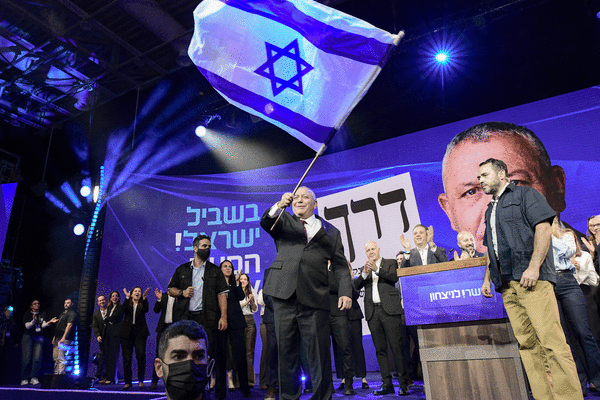
Israeli Prime Minister Benjamin Netanyahu spent much of election day warning his base that Arab citizens were voting in record numbers. He was right.
Results on Wednesday showed the two Israeli Arab parties are likely to have significantly increased their number of seats in parliament to about 17, well ahead of forecasts, after party leaders rallied supporters in an attempt to oust the country’s longest serving leader.
That could make them kingmakers in what’s likely to be a fraught period of negotiation over who will form the next government — and how. While Netanyahu’s right-wing religious alliance leads Gadi Eisenkot‘s opposition bloc with about 77% of votes counted, both are short of a majority and would require support from outside their coalitions to emerge victorious.
Israeli Arab parties are prepared to use their improved results to help Eisenkot form a minority government, but not Netanyahu, Ahmed Tibi, leader of the Ta’al party, told Nas Radio.
Eisenkot “has an opportunity to form a minority government with the support of the Arab parties, despite the complexities,” he said. “We want to use the current results to create real political change.”
But several issues need to be resolved before Eisenkot could conceivably form an Arab accord. The former military chief has said he won’t accept a party that doesn’t acknowledge Israel as a Jewish state or recognize Hamas as a terrorist organization that must be dismantled. That would likely exclude the Joint List, of which Ta’al is part, which is estimated to have won 11 seats.
An agreement could be more easily reached between Eisenkot and the more moderate Ra’am, also known as the United Arab List. That party is led by Mansour Abbas, who briefly served in an Israeli ruling coalition from 2021 to 2022. Ra’am is estimated to have won six seats, although this might still leave the opposition leader short of a majority.
“I believe that in the end the numbers will work out — we’ll talk,” Abbas told Israel’s Channel 12 late Tuesday. “Everyone is talking to us, not just the change bloc. A few days ago, a very, very senior member of the right approached me.”
Netanyahu is in a tougher position when it comes to securing Arab support. Aside from his own vocal opposition to the two parties’ involvement in government, he is allied with far-right parties including one led by nationalist extremist Itamar Ben Gvir, who would surely veto any deal.
Netanyahu’s Likud party confirmed it would not negotiate with any Arab party to try to form a government. “Not a chance,” spokesman Guy Levy said at the party’s headquarters in Jerusalem. “It’s not even a question that should be asked.”
The stunning showing of the Israeli Arabs – who make up 20% of the country’s population – compares with the 10 seats they won in 2022.
The two Arab parties differ in their ideologies and political strategies but were united ahead of the vote in a high-energy campaign that sought to oust Netanyahu and his right-wing government. They said life had become all but intolerable for their communities since the October 2023 Hamas attack, with police neglect in the face of rampant crime a particular problem.
In a statement late Tuesday, Eisenkot called the preliminary results a “complete vote of no confidence in the Netanyahu and the Oct. 7 government,” a reference to the blame many Israelis attach to the prime minister for assault that triggered the war in Gaza. He promised to “act immediately to implement the will of the people.”
Throughout Tuesday, Netanyahu posted photos of Arab women in niqab, the full traditional Islamic dress, saying a high Israeli Arab turnout was “a matter of life and death.”
—With assistance from Dan Williams.
©2026 Bloomberg L.P. Visit bloomberg.com. Distributed by Tribune Content Agency, LLC.





Comments