The Afterlife of Clothes
Published in Fashion Daily News
NORFOLK, Va. — The average American buys about 68 garments a year and discards roughly 81 pounds of clothing, according to the Environmental Protection Agency. What happens next is a story rarely told at the mall checkout counter: Clothes do not simply vanish. They migrate.
Some are folded into donation bins and driven to thrift stores. Some are compressed into bales and shipped overseas. Some are shredded into industrial rags or insulation. Many end up in landfills, where synthetic fibers can persist for decades. And a growing fraction — especially fast-fashion items made of blended materials — are incinerated.
The afterlife of clothes is a global, multibillion-dollar ecosystem shaped by consumer habits, textile science and geopolitics.
From Closet to Container Ship
Once dropped into a donation bin, clothing enters a sorting network that operates at industrial scale. Workers separate items by brand, fabric type and condition. High-quality pieces may be resold domestically. Lower-tier items are bundled into 1,000-pound bales and exported, often to markets in West Africa, Eastern Europe or Latin America.
In Ghana, for example, vast quantities of secondhand clothing — known locally as “obroni wawu,” loosely translated as “dead white man’s clothes” — arrive weekly. Traders purchase bales without knowing exactly what they contain. Profitable items are resold in open-air markets. Unusable garments can overwhelm local waste systems.
Environmental advocates say the trade can create economic opportunity while also exporting textile waste. Industry representatives counter that secondhand markets extend garment life spans and provide affordable clothing to millions.
The reality is complex. A T-shirt discarded in Virginia might be worn again in Accra. Or it might be dumped near a lagoon if too damaged to sell.
The Science of Fabric Decay
Natural fibers and synthetic fibers live very different afterlives.
Cotton, wool and linen are biodegradable under the right conditions. In oxygen-rich composting environments, they can break down within months. But most landfills are compacted and oxygen-poor. In such anaerobic conditions, even cotton may persist for years, releasing methane — a potent greenhouse gas — as it decomposes.
Polyester, nylon and acrylic tell a different story. Derived from petroleum, these plastics can take decades or longer to degrade. As they fragment, they shed microplastics — tiny fibers that enter soil and waterways. Washing machines are already a known source of microfiber pollution; disposal adds another pathway.
Blended fabrics complicate recycling efforts. A cotton-polyester blend cannot easily be separated into its constituent fibers. Mechanical recycling often downgrades textiles into lower-value products, such as carpet padding. Chemical recycling technologies are advancing, but they remain energy-intensive and not yet widely scaled.
In short, a garment’s afterlife is written in its fiber content.
Fast Fashion’s Long Shadow
The rise of ultra-fast fashion has accelerated clothing’s journey from store rack to landfill. Trend cycles now move at internet speed. Garments are produced cheaply, worn briefly and discarded quickly.
Researchers estimate that global textile production has roughly doubled since 2000. Yet the average number of times a garment is worn before disposal has declined.
Low price points often reflect low durability. Thin seams, synthetic blends and low-quality dyes make many items difficult to repair or recycle. The result is a churn that outpaces the capacity of secondhand markets.
Some brands are experimenting with take-back programs and resale platforms. Others are investing in circular design, creating garments meant to be disassembled and remade. Still, critics argue that systemic change requires reducing overall consumption — not simply finding more efficient ways to manage waste.
The Rise of Textile Recycling
Textile recycling is gaining momentum as municipalities and private companies search for solutions.
Mechanical recycling involves shredding garments into fibers that can be respun into yarn. The process weakens fibers, often requiring the addition of virgin material. Chemical recycling, still emerging, breaks down synthetic polymers into their molecular components, allowing them to be rebuilt into new fibers.
In Europe, extended producer responsibility laws are pushing manufacturers to account for end-of-life disposal. The European Union has mandated separate textile collection by 2025. Similar policies are under discussion in parts of the United States.
Startups are developing closed-loop systems, in which old garments become new ones with minimal waste. Others are creating biodegradable textiles designed to break down more safely at the end of use.
Yet infrastructure remains uneven. In many regions, consumers lack convenient options beyond donation or trash.
Repair, Resell, Reimagine
Before garments enter the global waste stream, they often pass through smaller, more intimate afterlives.
Clothing may be mended at home, passed to relatives or altered for a new fit. Vintage and resale markets have expanded online, turning once-casual thrift shopping into a digital economy. Platforms allow users to resell items directly, extending wear cycles.
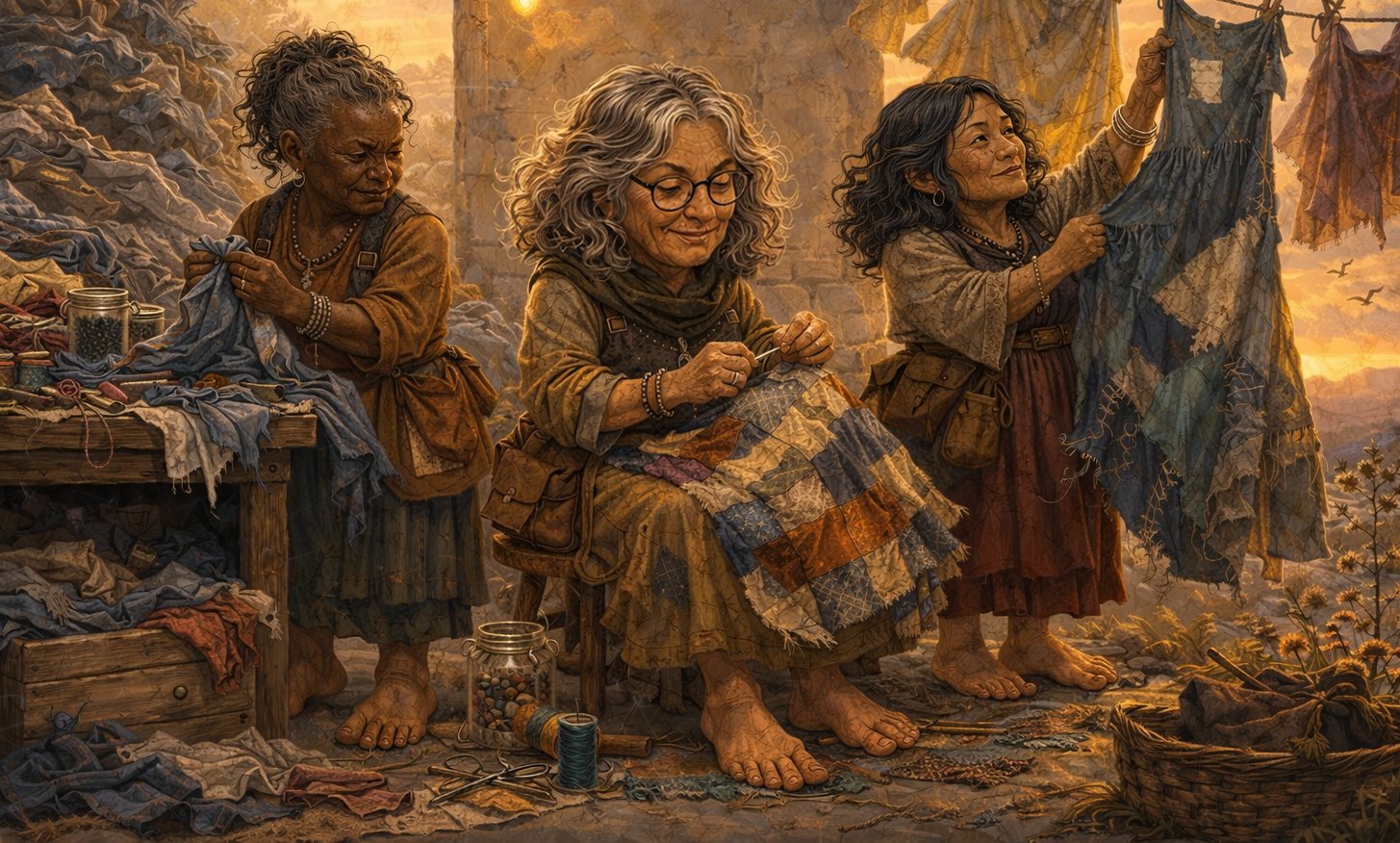
Some designers encourage visible mending — decorative patches and stitching that celebrate repair rather than conceal it. Others advocate “capsule wardrobes,” emphasizing fewer, higher-quality pieces.
Consumer behavior plays a pivotal role. Extending a garment’s life by just nine months can significantly reduce its environmental impact, according to research from the Waste and Resources Action Programme in the United Kingdom.
The afterlife of clothes is not predetermined. It is shaped by choices made at purchase, during wear and at disposal.
A Garment’s Second Story
Beyond economics and ecology lies something more intangible: narrative.
Clothes carry memory. A coat may absorb the scent of winter air. A shirt may hold the imprint of years. When garments are donated, resold or repurposed, they gather new stories.
Anthropologists describe clothing as a “second skin,” mediating identity and culture. In their afterlife, garments cross borders, classes and contexts. A sequined dress might appear at a thrift-store prom. A worn denim jacket might be cut into quilting squares.
In this sense, the afterlife of clothes is both material and symbolic.
As landfills swell and supply chains stretch across oceans, the fate of a single garment becomes part of a planetary system. Each fiber traces a path through labor markets, ecosystems and communities.
The next time a shirt is dropped into a donation bin or a pair of jeans is tossed aside, its story is not ending. It is moving — into another closet, another country or another form entirely.
Understanding that journey may reshape how people buy, wear and let go.
========
Eliza Marrow is a Norfolk-based reporter covering culture, sustainability and everyday life. Her work explores the hidden systems behind ordinary objects. This article was written, in part, utilizing AI tools.






Comments