Here's How: Select Proper Carpeting Padding
Select Proper Carpeting Padding
Dear James: I have selected the wall-to-wall carpeting I want, but now I need to pick out the carpet padding. Should I just pick the thickest or are there other considerations? -- Brian P.
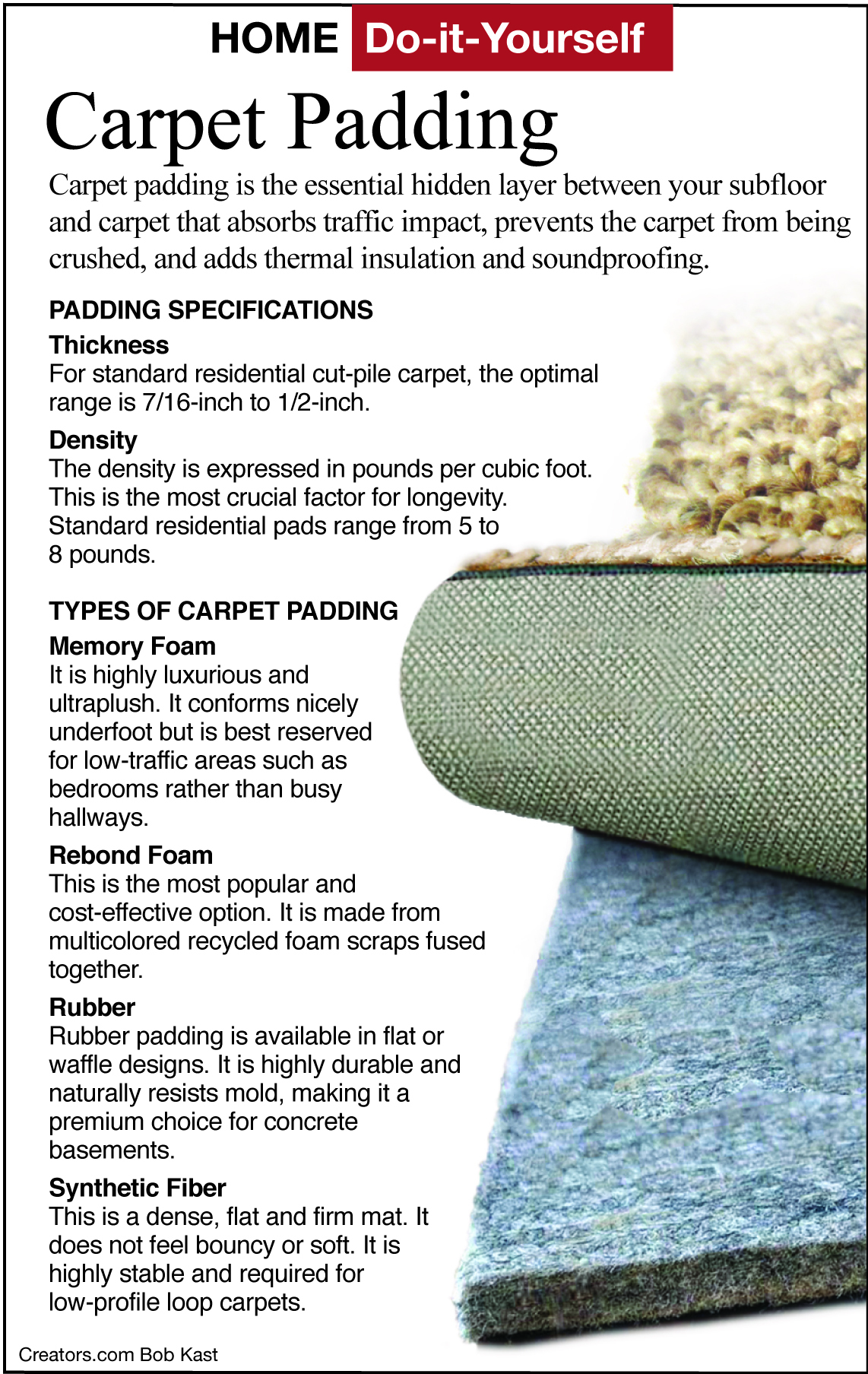
Dear Brian: The selection of the correct type of carpet padding is just as important as choosing the carpet type itself. The main considerations are the padding material type and its thickness.
It affects the comfort as well as the lifespan of the carpet. By providing a padded barrier between the carpet and the rough flooring, padding can even lengthen the life of your carpet. Without the padding, you could have rub spots in high traffic areas.
Carpet pads offer a nice layer of insulation. This can often reduce heating and air conditioning bills over a slab. After the carpet and padding are installed, you will notice a reduction in noise I the room and from other rooms.
Properly sized padding may also prevent your new carpet from stretching out of shape and slipping around. If a carpet pad is too thick but not very dense, it allows the carpet to flex a great deal as you walk on it. This may feel nice at first, but you will start to notice your vacuum cleaner bag is getting full of carpet fibers.
This excessive flexing of the carpet backing actually breaks it down, allowing the carpet fibers to fall out. On the other hand, with too little flexing, if there were no padding, the carpet fibers would take the full impact of people's weight, so they would break off and wear down quickly.
If the area has moderate to heavy foot traffic, a thin (3/8-inch maximum), high-density carpet pad works well. This provides the right amount of cushioning, but won't let the carpet overflex and fall apart early in its life. In other areas of your home, where there is little foot traffic, choose a thicker, less dense padding.
The typical padding materials for residential use are foam, fiber and sponge rubber. Each type is generally available in a variety of thicknesses and densities. For a given thickness, compare the ounces per square yard to determine the relative densities of the padding.
Foam padding is ideal for most residential applications and typically has fairly good density. There are several grades available, but you will usually see what is called bonded foam. It is made of small, multicolored pieces bonded together. The type you most likely find under older carpeting is fiber padding. Fiber pads produce a very firm foundation and are a good choice for very high-traffic areas. Sponge rubber pads are available in a waffled or flat contour. The waffled design is much more flexible than the flat design. The downside of using rubber padding is that it provides the least amount of insulation value for cold floors.
If you still have trouble determining the best kind of padding, try contacting the Carpet Cushion Council, www.carpetcushion.org. They have some very useful information, and you can request a brochure from them that has several helpful guidelines to follow.
========
Send your questions to Here's How, 6906 Royalgreen Dr., Cincinnati, Ohio, 45244 or visit www.dulley.com. To find out more about James Dulley and read features by other Creators Syndicate writers and cartoonists, visit the Creators Syndicate website at www.creators.com.
Copyright 2026 Creators Syndicate Inc.



























Comments