
My Pet World: How to make leash walks easier for cats (yes!) and dogs



Dear Cathy,
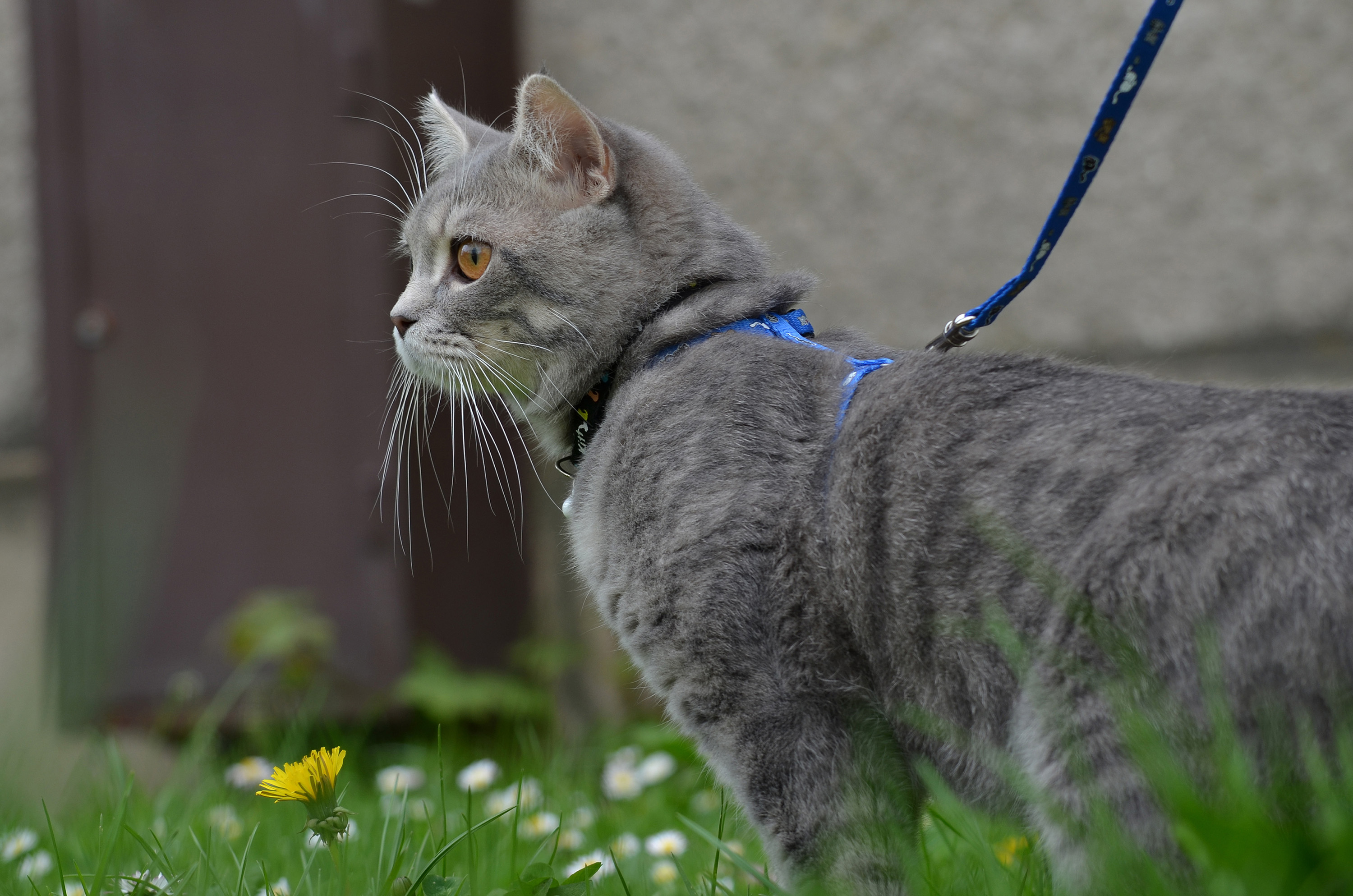
My son recently adopted a super friendly orange male tabby. He is neutered and is close to a year old. Is it possible to train the cat to wear a harness and walk on a leash at this age? We tried introducing him to a halter and he wasn’t too receptive.
— Laurie, Long Island, New York
Dear Laurie,
Absolutely! At a year old, your son's cat is certainly not too old to learn to wear a harness and walk on a leash. Cats can learn new things at any age. The secret is to take things slowly and make sure he has a positive experience every step of the way.
Start by leaving the harness on the floor where he can sniff and investigate it. Give him a treat whenever he approaches it, so he begins to associate it with something good. After a few days, try placing the harness loosely over his back for a few seconds, then remove it and offer another treat.
Once he's comfortable with that, try fastening the harness for a few seconds. Gradually increase the time he wears it, rewarding him with treats and praise along the way. Don't be surprised if he freezes, flops over, or walks as though his legs have stopped working. Some cats can be quite dramatic when they first feel a harness on their bodies. If he seems frightened or uncomfortable, remove it and try again another day.
When he is walking around the house comfortably in the harness, attach a lightweight leash and follow him around – indoors. Don't try to lead him just yet. Let him get used to the feeling of the leash while he explores familiar surroundings.
Eventually, you can try taking him outside to a quiet, secure area. Make sure the harness fits snugly so he can't slip out of it if something startles him. And don't expect him to walk like a dog. Cats tend to have their own ideas about where they want to go and how long they want to stay there. You may spend more time standing around while he sniffs the grass than actually walking anywhere.
Some cats take to leash walking quickly, while others need weeks of practice. And some simply prefer to enjoy the outdoors from the comfort of a window or patio. Only time will tell, but do give it more training time before deciding it’s a “no-go.”
Dear Cathy,
My grown son, Dan, has an adorable four-year-old, 15-lb. poodle-dachshund mix that he adopted from a shelter six months ago. I am happy to watch him, and love to walk him. But Milo walks from one side of the sidewalk to the other crossing right in front of my feet and tripping me up. I try to keep the leash steady, but he is strong and quick. What do I do? He is not interested in treats when he is walking outside.
— Grannie, Syosset, New York
Dear Grannie,
I recommend a properly fitted front-clip harness to give you better control during walks. Unlike a back-clip harness, it can gently redirect Milo when he pulls, making it easier to keep him from darting across your path. Pair it with a standard four- to six-foot leash rather than a retractable one, which gives him too much freedom to zigzag.
Next, teach Milo to walk on one side of you, either right or left, but always the same side. Begin indoors, away from distractions. Take a few steps with him beside you and reward him with treats, praise, or a favorite toy. You can even introduce a cue, like "with me," so he learns what you want him to do. Once he's doing well, practice in the yard or another quiet area before heading out for a walk.
During the walk, if he starts to cross your path, stop rather than step around him. Encourage him back to your chosen side, reward him, and then continue walking. He'll gradually learn that staying beside you keeps the walk moving.
You mentioned Milo isn't interested in treats outdoors. That's not unusual when there are so many interesting things to see and smell. Try a higher-value treat, like a tiny piece of chicken or cheese, or reward him by letting him stop and sniff after walking nicely beside you. For many dogs, sniffing is its own reward.
Ask Dan to practice these same skills with Milo so he gets a consistent message from both of you. Start with short walks in quiet areas where Milo can succeed, rather than expecting him to manage a long walk right away.
_____
_____
========
(Cathy M. Rosenthal is a longtime animal advocate, author, columnist and pet expert who has more than 25 years in the animal welfare field. Send your pet questions, stories and tips to cathy@petpundit.com. Please include your name, city, and state. You can follow her @cathymrosenthal.)
©2026 Tribune Content Agency, LLC.
(c) 2026 DISTRIBUTED BY TRIBUNE MEDIA SERVICES, INC.







Comments