Commentary: Rural and religious Americans lost faith in science. We can win them back
Published in Science & Technology News
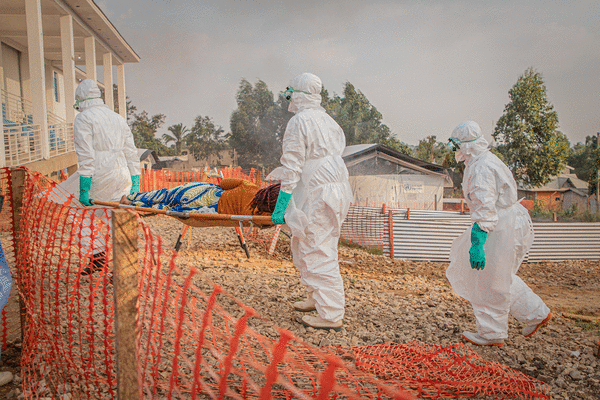
In July 2014, a man sick with Ebola flew from Liberia into Lagos, Nigeria, one of Africa’s largest and busiest cities. One imported case in a place like that could have sparked an urban epidemic. Instead, Nigeria stopped the outbreak at 20 cases.
Health workers tracked down nearly 900 people who had been exposed and made some 18,500 face-to-face visits to check on them. Each of those people had to open the door, answer hard questions and accept weeks of monitoring for a disease that kills about half of the people it infects. No one could force that. It had to be earned.
Consent is essential to contact tracing. In the end, public health runs on trust.
A new global survey shows how much of that trust Americans still give, and where it is thinning. The Wellcome Global Monitor, released in October and conducted by Gallup in 140 countries, found that 52% of Americans trust science “a lot” — double the global rate.
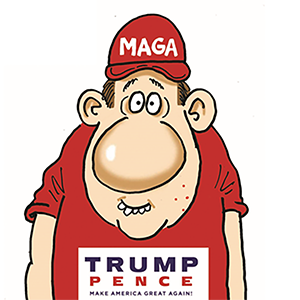
But that trust is uneven. A STAT analysis of the survey looked at who believes science benefits most people in their country. In other wealthy nations, religious and secular people differ by an average of 5 percentage points. Here in the U.S., the gap is 24 points. Rural and urban Americans differ by 19 points. And 47% of Americans without a four-year degree agree about the benefits, compared with 71% of college graduates.
That gap is widening: Since 2018, agreement has risen 13 points among college graduates but just 3 among those without a degree.
I read these numbers as a report on people’s lives. “People are feeling left behind,” Brian Castrucci, who leads the de Beaumont Foundation, told STAT. Many have reason to.
As the economists Anne Case and Angus Deaton have shown, American adults without a four-year degree are dying younger, from overdoses, alcohol, suicide and heart disease. Jacob Bor and his colleagues at Boston University have put a number on the larger toll. In 2023 alone, about 700,000 Americans died who would have survived at the death rates of other wealthy nations.
When you bury neighbors young, it is hard to believe science works for people like you.
The Wellcome Global Monitor also points to a remedy. Worldwide, 26% of people trust science a lot. Among those with strong confidence in their hospitals and clinics, the figure rises to 43%. Trust in science is built in the places where people get care.
The same is true here. This spring, a poll by the Harvard T.H. Chan School of Public Health and the de Beaumont Foundation found that 7 in 10 Americans still trust their local health department. Fewer trust their state health department, and only half trust the Centers for Disease Control and Prevention. Trust lives close to home.
How do we close these gaps? The history I trace in my book points to four steps.
First, own our mistakes.
In the fog of the pandemic, those of us in public health made errors. We should say so plainly. Admitting error is how science works. It should also be how science speaks to the public. People forgive mistakes. They do not forgive being told there were none.
As Castrucci put it, “We are not going to be able to lecture people into trusting us.”
Second, work with faith communities, not around them.
When David Satcher led the CDC in the 1990s, many Black Americans distrusted the medical system, with good reason. He did not try to argue that distrust away. He built partnerships with churches, schools and neighborhood groups. Through Black churches, the agency shared plain advice on smoking, diet, stress and violence. The 24-point faith gap the Wellcome Global Monitor found will not close through lectures. It will close in fellowship halls.
Third, invest in the people communities already trust.
In Chicago, violence prevention programs hire outreach workers, many of whom grew up on the same blocks they now serve. Arne Duncan, who founded one such program, says his team includes people with Ph.D.s and people with “Ph.D.s in the streets.” In his words, “Those who have been closest to the problem … are actually the best solution.” Trust grows when the people delivering care share the lives of the people receiving it. That means funding local health departments, community health workers and a workforce that reflects the communities it serves, with and without college degrees.
Fourth, bring care close to home and show up before the crisis.
In parts of rural America, hospital closures can mean driving up to 100 miles in an emergency. Costa Rica went the other way. Since the 1970s, it has built rural clinics to offer the same care as city clinics. Today, every person is assigned, by where they live, to a local team that includes a doctor, a nurse and a community health worker. These teams aim to visit every household at least once a year. Nobody is lost to follow-up, because nobody was ever waiting to be found. When a health threat arrives, the messenger is already a familiar face.
None of this requires a new law. It requires new habits. Listen before advising. Explain your reasons. Publish what you heard. Come back next year, and the year after that.
The new global survey is good news with a warning inside it. Closing these gaps will take thousands of trusted people, in every community, doing the patient work of listening. That is how public health first earned the public’s trust, and it is how we will reach the Americans who feel left behind.
I was born in Jamaica in 1962, small and yellow with jaundice. There were no incubators, so my caregivers carried me outside and laid me in the sun. My mother has told me how upset she was when they took me from her. Knowledge saved my life. Trust is how that knowledge reaches the next child, and the next frightened mother.
____
Michelle A. Williams is a professor of epidemiology and population health at Stanford University School of Medicine, former dean of the faculty at Harvard T.H. Chan School of Public Health and author of “The Cure for Everything: The Epic Struggle for Public Health and a Radical Vision for Human Thriving.”
_____
©2026 Chicago Tribune. Visit at chicagotribune.com. Distributed by Tribune Content Agency, LLC.


Comments