Oceans and forests have absorbed roughly half our carbon emissions for decades, slowing climate change – but can they keep it up?
Published in Science & Technology News






Over the past two centuries, humans have pumped billions of tons of carbon dioxide into the atmosphere by burning fossil fuels, raising global temperatures in the process.
Luckily for humanity, Earth has done what it could to soften the impact.
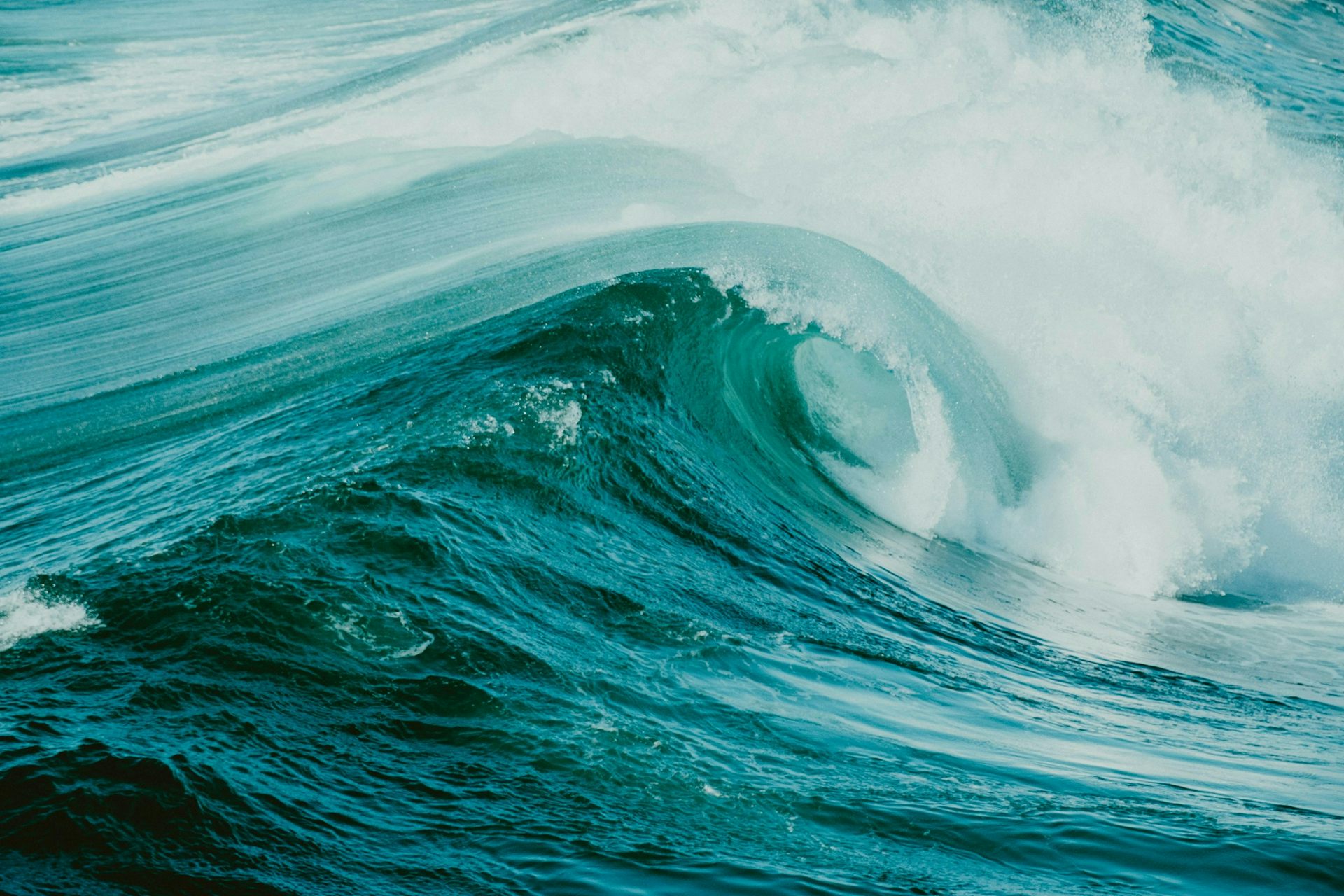
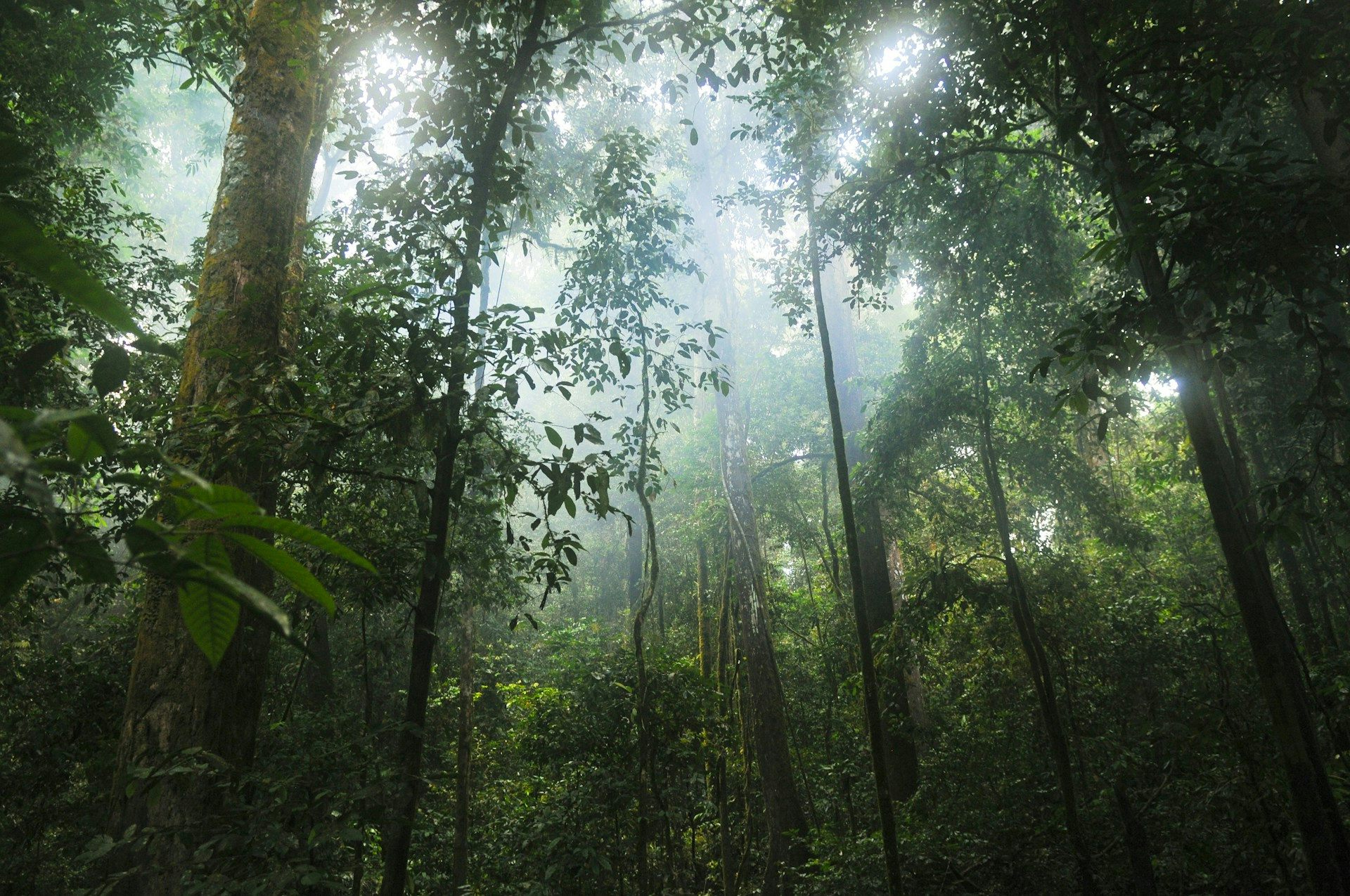
The world’s oceans have absorbed 35% of carbon dioxide emissions from fossil fuels since 1990, our new research shows, and the forests and other plants of the world have absorbed another 13%.
The importance of these two enormous natural carbon sinks cannot be overstated as global temperatures rise, fueling heat waves, fires, storms, floods and droughts around the world. Yet there is much that scientists do not understand about these carbon sinks – most importantly, how exactly they’ll behave in the future.
If the oceans and forests keep absorbing the same amount of carbon dioxide, scientists will have a sense of what to expect in the future and what can be done to slow climate change. And governments will know their remaining carbon budgets – that is, how much carbon dioxide can still be emitted into the atmosphere while keeping global temperatures below agreed-to levels.
But what if those carbon sinks change?
We have been working on greenhouse gas measurements for decades. In a new study, published Nov. 12, 2026, in the journal Science, we describe an alternative method for measuring these crucial carbon sinks, and what it shows.
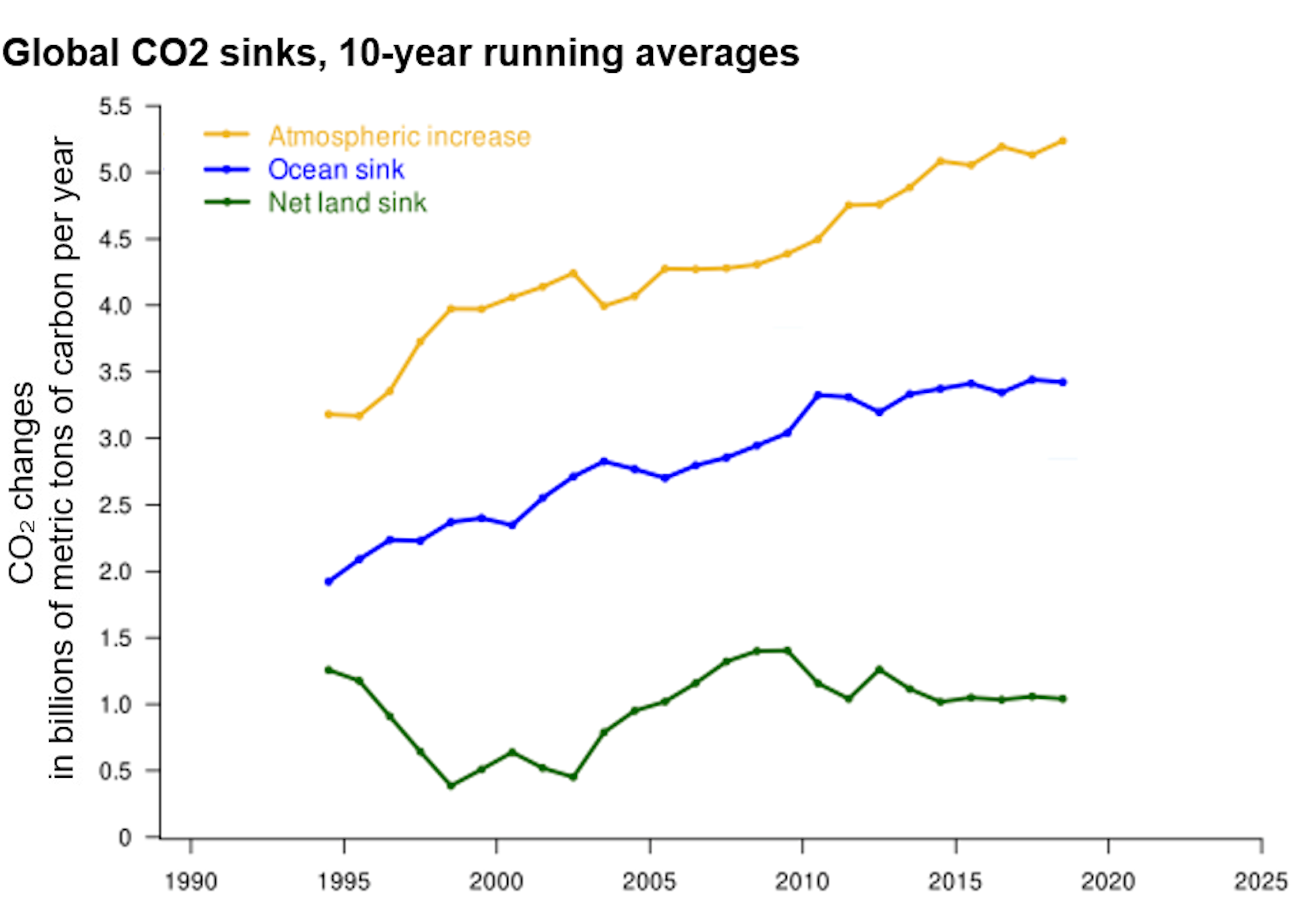
We found that while the ocean sink has been expanding, meaning the oceans are taking in more carbon dioxide, that expansion might begin to slow down, leaving the oceans less effective at absorbing carbon in the coming decades. We found that the land sink has not been expanding, which was something of a surprise.
Measuring how much carbon is being taken up by the world’s oceans and forests is devilishly difficult and prohibitively expensive.
This is because many parts of the land and ocean don’t behave in the same ways. What occurs in one ocean region or forest can be very different from another; and the behavior in one year can be very different in the next, often for reasons scientists do not fully understand.
Computer models can help overcome some of these complexities, but they too have limitations. Satellites can also help, but they cannot see through clouds, nor can they see what is happening in the soil or mid-to-deep ocean.
As carbon cycle scientists, we set out to find a different way to measure these carbon sinks.
Our new study approaches the problem from another angle. We used high-precision measurements of atmospheric oxygen (O₂), combined with atmospheric carbon dioxide (CO₂) measurements, to quantify how the ocean and land carbon sinks takeing up carbon dioxide.
This works because land, oceans and burning fossil fuels have different effects on oxygen: When fossil fuels are burned, they not only produce CO₂, they consume O₂. On land, when plants take up CO₂ to grow, they simultaneously release O₂. When the oceans take up atmospheric CO₂, there is no corresponding release of O₂.
This means that if we measure both CO₂ and O₂ in the atmosphere, then we can quantify the ocean and land carbon sinks. It is a straightforward mathematical approach of solving two equations with two unknowns, combined with our knowledge and measurements of the global budgets of CO₂ and O₂.
When we looked at the ocean and land carbon sinks over the past three decades, the results were surprising and sobering.
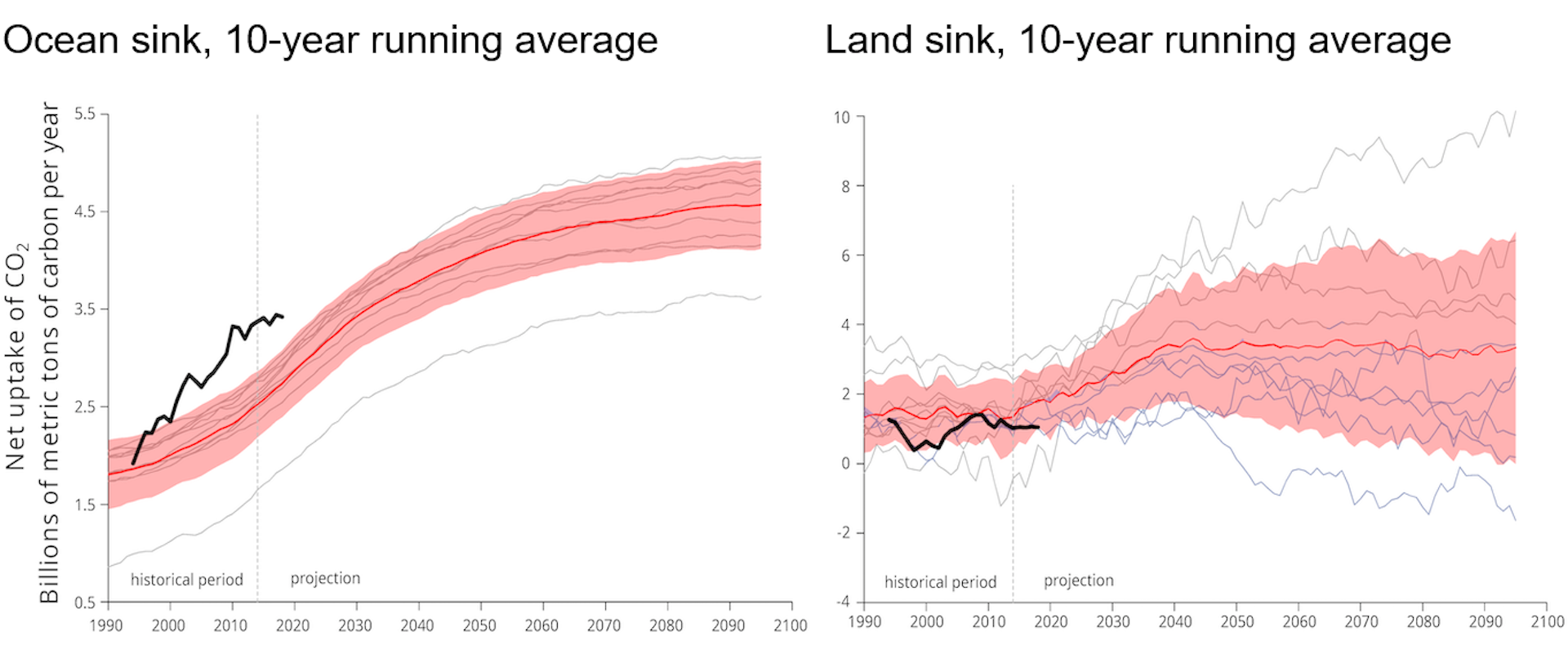
In contrast to most computer model simulations, we did not find the land carbon sink increasing over time to keep pace with increasing fossil fuel emissions. We did, however, find a larger ocean carbon sink than predicted by most models, and we found that it has been increasing as emissions grow.
If these trends in carbon sinks continue, then in the coming decades, humans will be relying more heavily on the oceans to slow down climate change. But in the next few decades, there are reasons to believe the oceans could become less effective at absorbing carbon.
For example, warmer waters are not able to hold as much gas, such as carbon dioxide. Warmer surface waters are also less efficient at mixing into the deep ocean, which has the beneficial effect of locking carbon dioxide away from the atmosphere for many hundreds of years.
The data for the past decade hints at the possibility that while the ocean carbon sink is increasing now, its rate of increase may be slowing down.
For the oceans, most computer models agree with each other, but, for the historical period, they do not match our oxygen-based results. For the land, models vary widely from each other, and most do not match our oxygen-based results.
Computer models are essential to provide governments with feasible scenarios to avoid dangerous climate change, but to be effective they need to be better grounded in what real-world observations are showing. Nature is difficult to represent with a series of equations, and observations are few considering the size of the planet.
We believe our study improves understanding of global carbon sinks and can help lead to more reliable projections of what might happen with climate change in the coming decades. But like any scientific approach, our oxygen method also has drawbacks.
The measurements themselves are challenging, such that only about 10 research laboratories in the world are routinely doing them. Calibrating the measurements is an ongoing challenge. Earth is not helping: Warmer waters hold less gas, meaning that as oceans warm in response to climate change, they expel some oxygen into the atmosphere. We must account for this in our carbon sink calculations. And to take into account variability in ocean circulation and other ocean processes, we have to average our results over 10-year time frames.
Policymakers and the public need answers faster. We believe the solution involves both improving the atmospheric oxygen approach and using other independent approaches: measurements of carbon and oxygen in the oceans, computer models and satellites are all essential. Combining these approaches will lead to more robust understanding of the carbon cycle and climate change, and better knowledge of where these valuable carbon sinks and the global climate are headed.
This article is republished from The Conversation, a nonprofit, independent news organization bringing you facts and trustworthy analysis to help you make sense of our complex world. It was written by: Andrew C. Manning, Rochester Institute of Technology; Andrew J. Watson, University of Exeter, and Eric J. Morgan, University of California, San Diego
Read more:
COP31: Governments are failing to rein in emissions from their own power plants
The world will soon shoot past 1.5°C. What does this mean?
Climate engineering would alter the oceans, reshaping marine life – new study examines each method’s risks
Andrew Manning has previously received funding from the United Kingdom's Natural Environment Research Council (NERC), and from the European Union's Horizon Europe and European Research Council's research science funding streams.
Andrew Watson receives funding from the European Commission funded research programs,currently under OceanICU, a multi-partner project researching the ocean carbon cycle. He also receives funding from United Kingdom Research and Innovation, a research funding body of the UK government.
Eric J. Morgan received funding for this project from the National Science Foundation, the National Oceanic and Atmospheric Administration, and Schmidt Sciences LLC.







Comments