50 years ago, the Supreme Court broke campaign finance regulation
Published in Political News
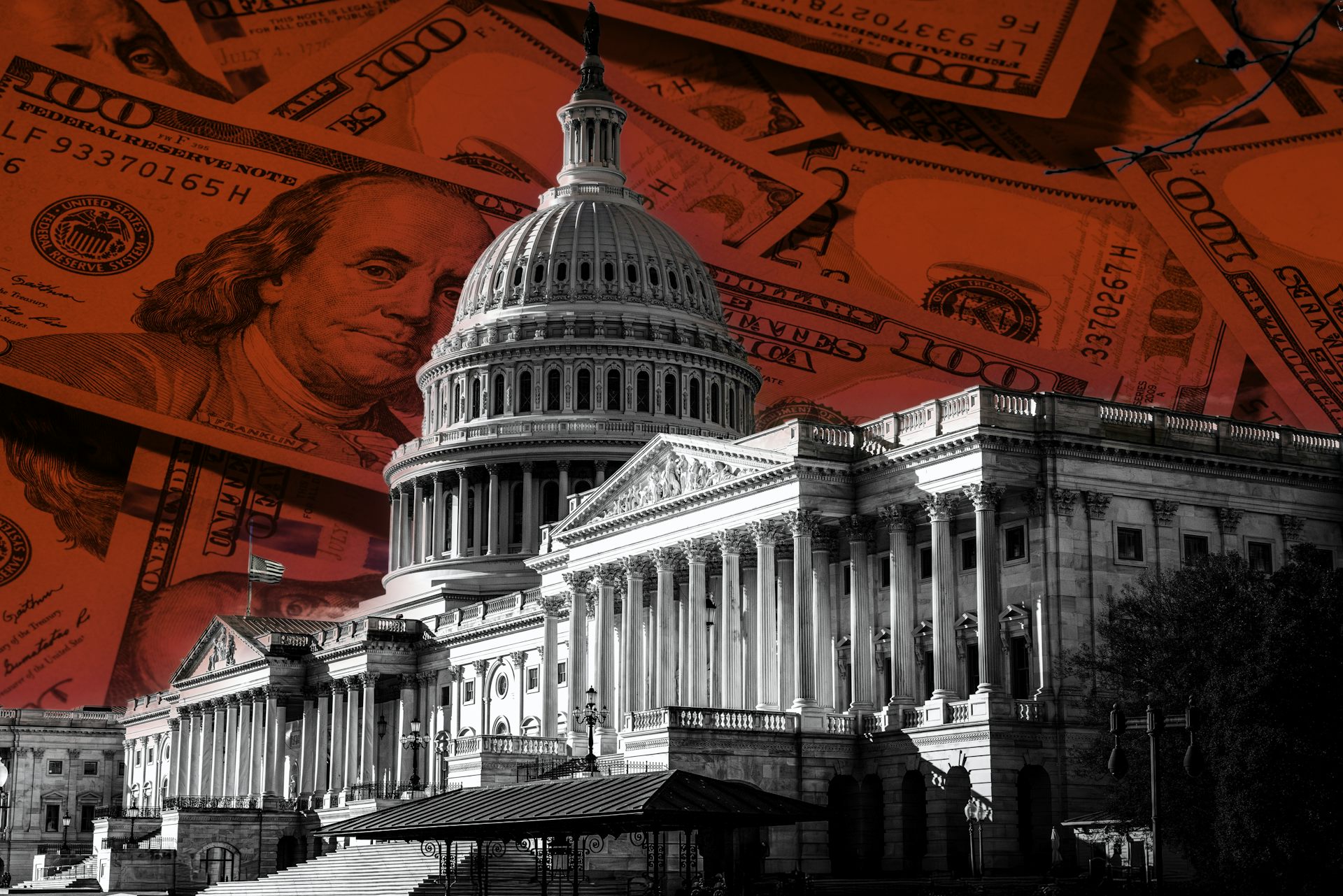
In 2024, spending on federal elections totaled almost US$15 billion in the United States. The United Kingdom, in contrast, spent approximately $129 million on its 2024 parliamentary elections – less than 1% of 2024 U.S. spending – despite having a population one-fifth the size of the U.S.
Indeed, most other democratic countries spend only a fraction of what the U.S. does on their respective elections.
Why do U.S. elections cost so much?
Many people may attribute the blame to Citizens United v. FEC, the 2010 U.S. Supreme Court case that struck down corporate spending limits in elections.
Yet the source runs much deeper, to a case that marked its 50th anniversary in early 2026: Buckley v. Valeo, a landmark case that established the modern framework for U.S. campaign finance regulation.
For most of U.S. history, political spending was an unregulated practice. In turn, big-moneyed interests wielded major influence over elections without any legal impediments.
In the early 20th century, however, Congress began implementing small measures to rein in unfettered campaign finance. In 1907, for instance, Congress passed the Tillman Act, which banned corporations from donating directly to candidates. By 1971, Congress had implemented the modern Federal Election Campaign Act, or FECA, which initially just included disclosure and disclaimer requirements for candidates.
Nevertheless, following the Watergate scandal – which included bags of cash and campaign dirty tricks – Congress enacted the more comprehensive 1974 FECA Amendments to more effectively restrain big money in American politics.
The FECA Amendments instituted, among other things, dollar limits on the amount of money individuals and political committees could contribute to federal candidates. Similarly, it limited the amount of money individuals could independently expend to support the election or defeat of a federal candidate.
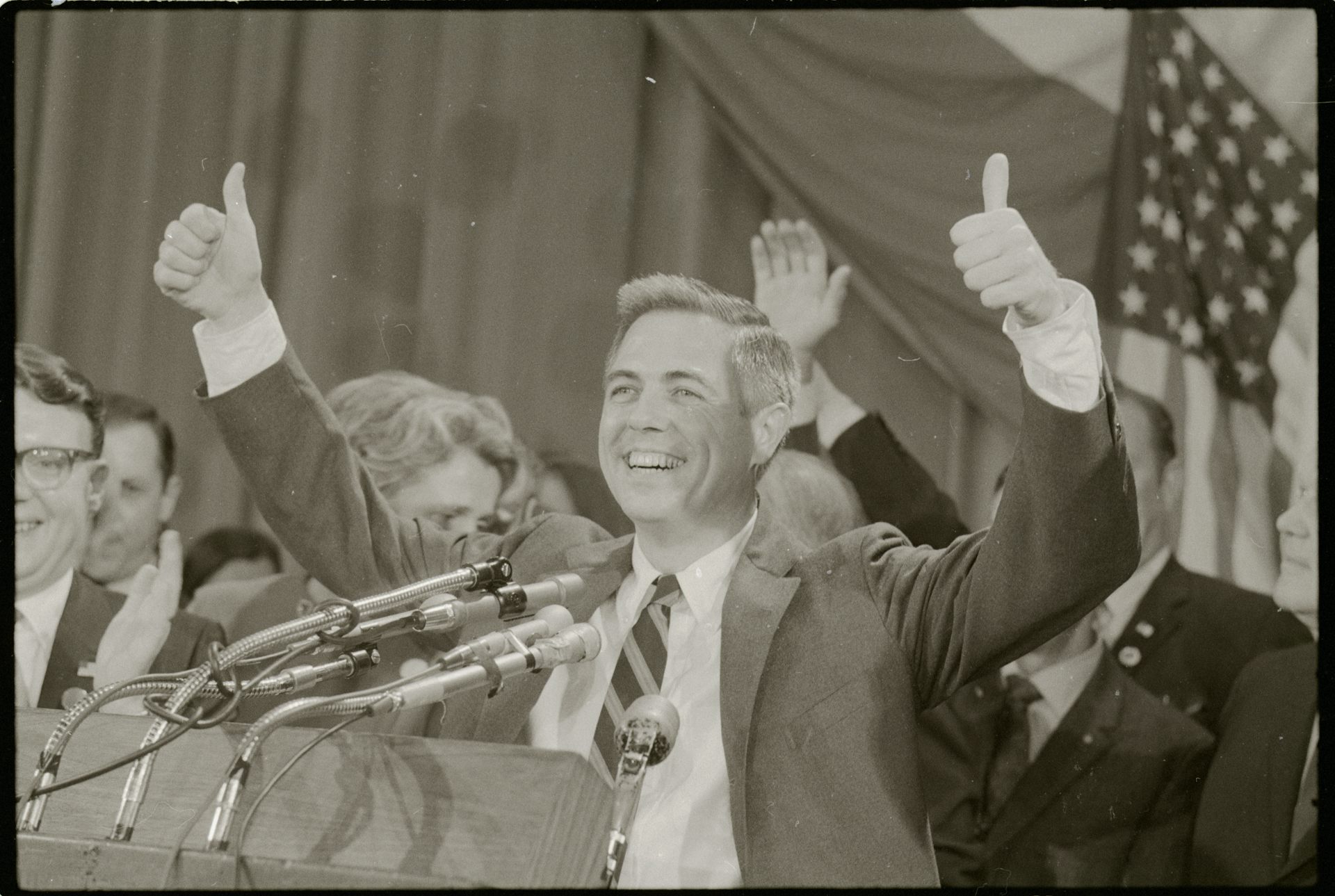
Almost immediately, a number of politicians and other parties filed suit – including U.S. Sen. James Buckley, a New York conservative; former U.S. senator and 1968 presidential candidate Eugene McCarthy, a Minnesota Democrat; and the New York Civil Liberties Union – to challenge the amendments’ constitutionality.
They argued that the new laws restricted First Amendment freedoms of political speech and expression. Their argument was straightforward: If I can’t spend as much as I want to support a candidate, I am unable to fully express my political views. The lawsuit ultimately ended up before the U.S. Supreme Court.
On Jan. 30, 1976, the Supreme Court issued its opinion. One of the lengthiest in U.S. history – 294 pages in total – the opinion took an axe to the FECA and effectively reduced federal campaign finance law to a patchwork of laws and rules resembling regulatory Swiss cheese.
In doing so, the court laid the groundwork for the development of the modern campaign finance system in the U.S.
What did Buckley v. Valeo do?
For one, the court declared that limits on political contributions and expenditures, in fact, affect First Amendment interests. The court found limits on contributions to indirectly impact donors’ right of expression, the idea being that a contribution to a candidate acts as an expression of support for them.
Contribution limits can furthermore directly infringe on candidates’ speech rights if they are so low as to prevent the candidate from effectively campaigning, the court decided.
The court, meanwhile, found limits on political expenditures, such as spending money on a TV ad, to impose an even more direct constraint on speech rights. In the court’s words, such limits reduce “the quantity of expression by restricting the number of issues discussed, the depth of their exploration, and the size of the audience reached.” With this, the court embraced what its critics have dubbed the “money is speech” principle.
So whenever a law constrains political speech, the government must justify it via a “compelling” state interest. Thus came the court’s second major move via the Buckley decision: narrowly defining the government’s interest in regulating money in politics.
Specifically, the court recognized only one compelling state interest in restricting political spending: preventing quid pro quo corruption – the exchange of money for political favors. With this, the court outright rejected that the government had a serious, broader interest in promoting political equality, one of the driving forces behind the passage of the 1974 FECA Amendments.
Applying this framework, the court upheld federal limits on contributions to candidates because directly giving money to politicians carries a risk of quid pro quo.
In contrast, the court invalidated FECA’s limits on independently made political expenditures – expenditures made on a candidate’s behalf but not in coordination with the candidate. In the court’s view, if somebody spends money to support a candidate without coordinating with that candidate, no corruption concern exists – an assumption that remains widely disputed. Thus, Congress had no compelling interest to limit political advocacy via expenditures.
While a product of 1970s lawmaking, the Buckley decision has played a major role in shaping modern U.S. politics. Its impact on how lawmakers can – and cannot – regulate money in politics endures today.
The most pronounced effect of Buckley has been the proliferation of spending by outside groups making those independent expenditures.
Buckley’s invalidation of independent-expenditure limits applied only to limits on individuals. But the Supreme Court has since extended Buckley’s logic to spending by organizations. In Citizens United in 2010, the court held that the government had no compelling interest in limiting independent expenditures made by entities such as corporations, unions or political action committees – PACs – that do not coordinate with candidates, known today as super PACs.
Shortly following the Citizens United decision, a federal appellate court applied Citizens United to strike down limits on contributions to super PACs, the idea being they could not engage in corruption if they were not coordinating with candidates.
Donors were now free to give unlimited sums of money to super PACs, which were free to spend unlimited sums of money to influence elections. Each passing election since then has seen untold super PAC spending, peaking at over $2.6 billion in 2024.
Super PACs are only one part of the modern political landscape, though.
Following Citizens United, donors realized that if they were to donate money to a super PAC, federal law would mandate the disclosure of that donation. Yet, federal law contained a loophole: shell companies – companies formed purely to preserve the anonymity of their makers – and 501(c)(4) nonprofits could donate money to super PACs without having to disclose who their money came from. Collectively, these became known as “dark money” groups.
Wealthy donors thus started giving money to these dark money groups as a vehicle to fund super PACs without detection. These groups have become a major force in election spending, accounting for an estimated $1.9 billion in 2024.
The Buckley decision has also led to the proliferation of self-funded candidates. The Supreme Court held that the government cannot limit self-funding because the risk of quid pro quo is nonexistent – again, a disputed assumption.
U.S. campaigns now feature multimillionaires and billionaires propelling themselves into electoral contention each election cycle simply by virtue of having a well-funded bank account. In 2024, 65 federal candidates spent at least $1 million of their own dollars on their campaign.
One area that still remains open to regulation post-Buckley is contributions to candidates, political parties or PACs.
Thus, contribution limits exist federally and in most states in some form.
Still, the government’s authority to cap contributions is not infinite. The Supreme Court has occasionally struck down certain states’ limits when they are deemed “too low.”
The court, moreover, invalidated in 2014 an aggregate limit on the amount a donor could contribute overall to candidates per election, reasoning that Buckley’s anti-corruption rationale could apply only to direct, one-to-one exchanges. Wealthy donors were thus free to donate to hundreds of candidates in an election cycle.
In 2025, the court heard a challenge to a federal law limiting how much political parties can spend in coordination with their nominees. Intended to prevent individuals from using parties as a means of circumventing individual-to-candidate contribution limits, the law has been on shaky ground for decades.
The court will issue a ruling on that challenge in the coming months. Whether the law is upheld or struck down, Buckley is guaranteed to play a major role in the decision.
This article is republished from The Conversation, a nonprofit, independent news organization bringing you facts and trustworthy analysis to help you make sense of our complex world. It was written by: John J. Martin, Quinnipiac University
Read more:
Citizenship voting requirement in SAVE America Act has no basis in the Constitution – and ignores precedent that only states decide who gets to vote
What does a state’s secretary of state do? Most run elections, a once-routine job facing increasing scrutiny
What is ‘dark money’ political spending, and how does it affect US politics?
John J. Martin does not work for, consult, own shares in or receive funding from any company or organization that would benefit from this article, and has disclosed no relevant affiliations beyond their academic appointment.





























Comments