Patriots and loyalists both rallied around St. Patrick’s Day during the Revolutionary War
Published in Political News
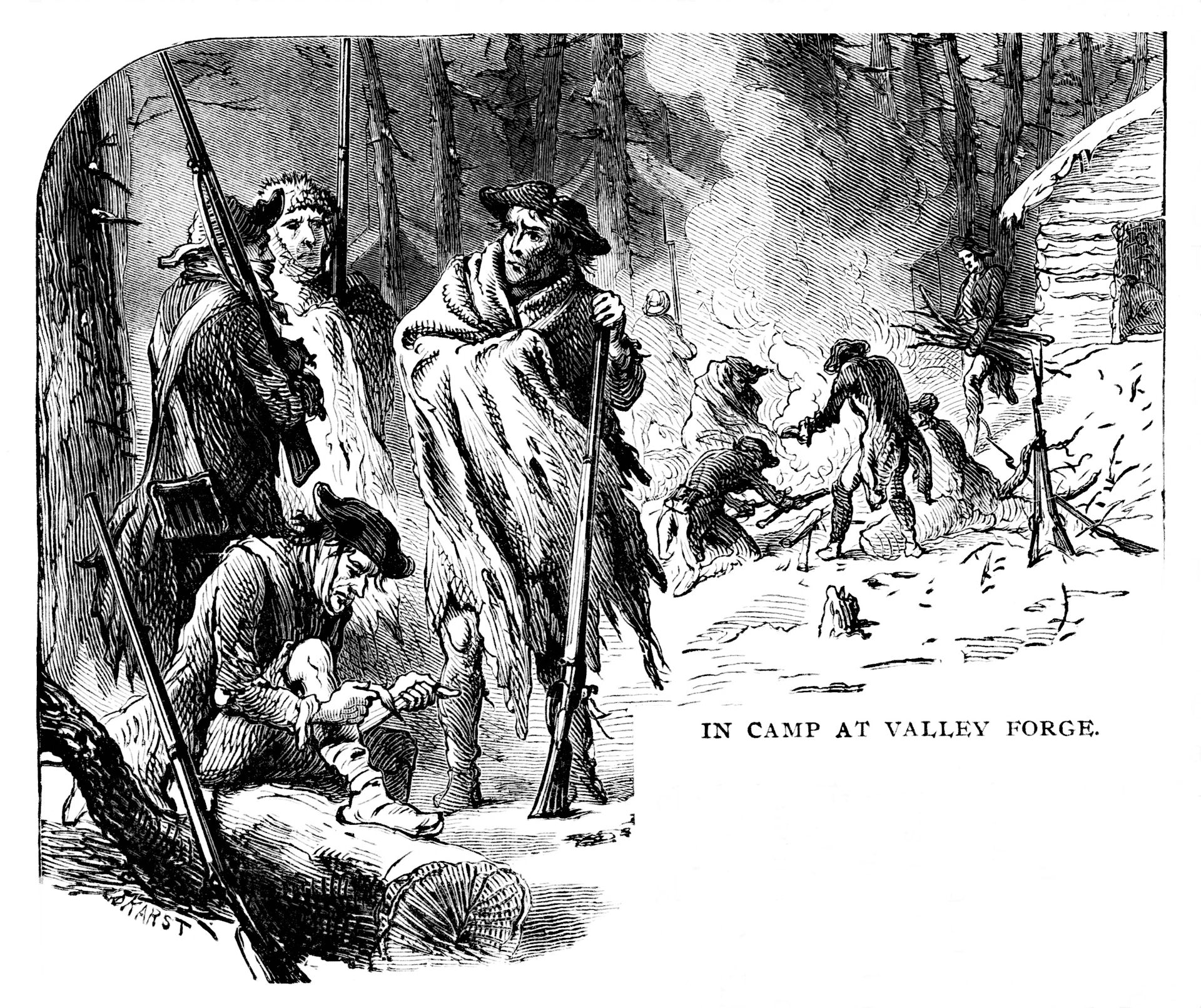
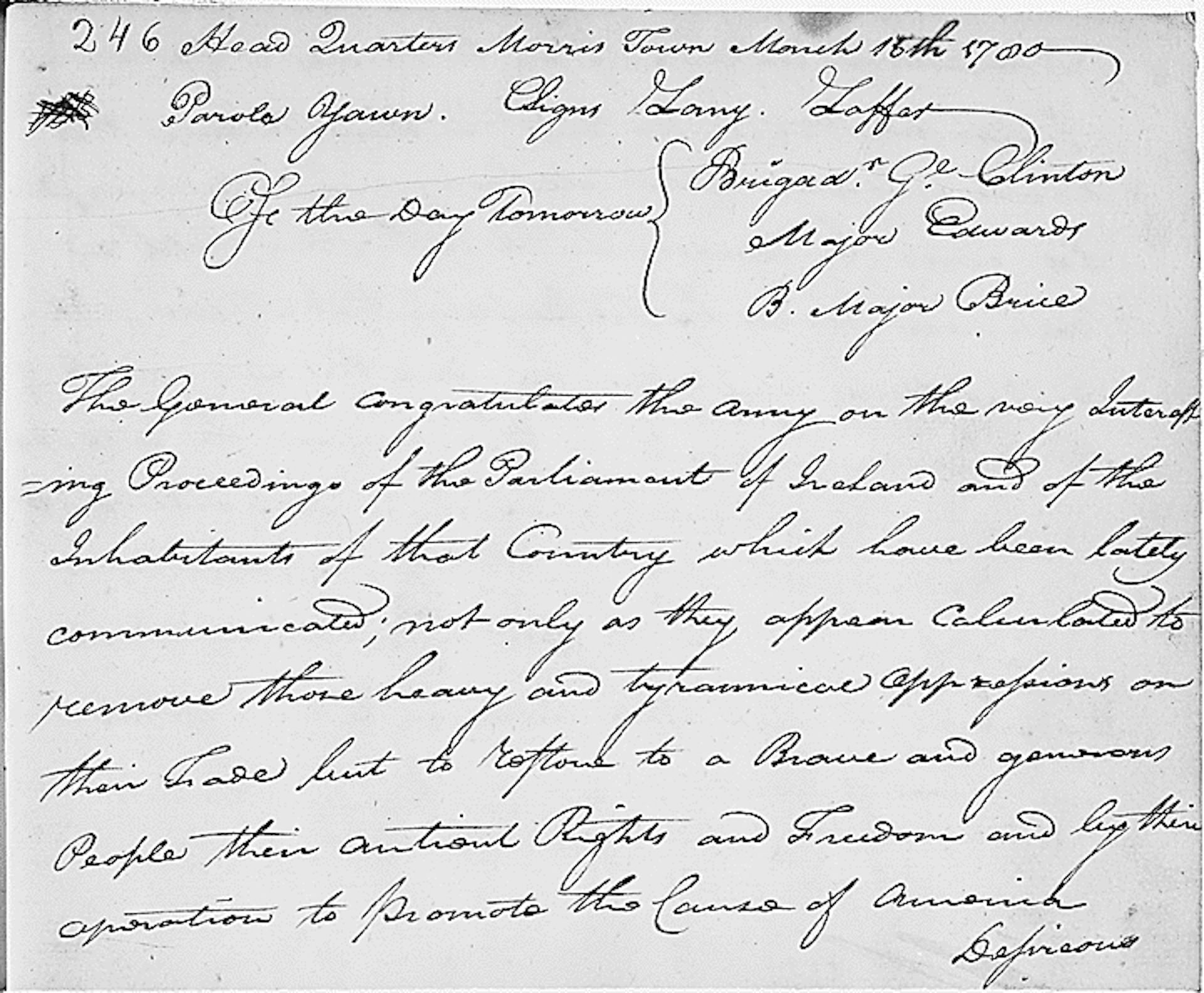
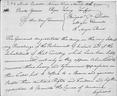
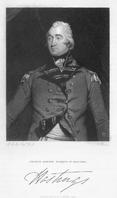
The Continental Army’s winter encampment at Valley Forge, between December 1777 and June 1778, is the stuff of legend. Chased out of Philadelphia by the British Army, George Washington and over 12,000 American troops retreated to Valley Forge, where they spent six long months harried by hunger, disease and the bitter cold.
In this context of frayed nerves and short tempers, a scuffle arose when some of the native-born soldiers antagonized the Irish recruits by dragging an effigy of a “stuffed Paddy” through camp on St. Patrick’s Day, March 17, 1778. The Irish, outraged at the sight of their patron saint being mocked, rose up to meet the challenge with their fists.
But George Washington quickly responded by claiming, “I, too, am a lover of St. Patrick’s Day.” He ordered an extra glass of grog for every man, “and thus all made merry and were good friends.”
By the late 1770s, people had been commemorating the anniversary of St. Patrick’s death – reputedly on March 17, 461 – for over a thousand years. Irish immigrants brought the tradition with them when they moved to North America, and officers in the Continental Army regularly used the holiday to bring glimmers of cheer to their cold and gloomy camps.
In Morristown, New Jersey, in 1780, for example, Col. Francis Johnston insisted that “the celebration of (St. Patrick’s) Day should not pass by without having a little rum issued to the troops,” and he bought a small barrel to prove it. Accounts of the party were published in local newspapers.
“The whole army celebrated the day with that decorum which is characteristic of them, and which evidenced their attachment and unfeigned regard to the valiant Irish nation,” said an eyewitness. The soldiers’ dual loyalties to Ireland and America were reflected in the toasts they drank that day.
Cheers were raised for George Washington and “the American army,” but also for Irish patriots such as Henry Grattan and Henry Flood. “May the field pieces of Ireland bellow,” proclaimed one soldier, “till the nation is free.”
As the author of a forthcoming book on the global history of St. Patrick’s Day, the wartime popularity of St. Patrick’s Day does not strike me as surprising. Irish immigrants made up a sizable fraction of George Washington’s Continental Army during the American Revolution, partly because the war came on the heels of the first wave of modern mass migration from Ireland, which lasted from the early 1720s to the mid-1770s.
As a result, Irish newcomers, especially Presbyterians from Ulster, were overrepresented in the Middle Colonies of Pennsylvania, Delaware, New York and New Jersey when the war broke out. Their disproportionate enlistment accounts for the fact that Pennsylvania’s collection of infantry regiments and companies was nicknamed the “Line of Ireland” during the conflict.
Yet focusing on Irish patriots tells only half the story of what St. Patrick’s Day meant during the Revolutionary War era.
Plenty of Irishmen served as British redcoats throughout the war too.
On March 17, 1779, 2½ years after capturing New York, the British army published a recruiting advertisement in the city’s Royal Gazette newspaper.
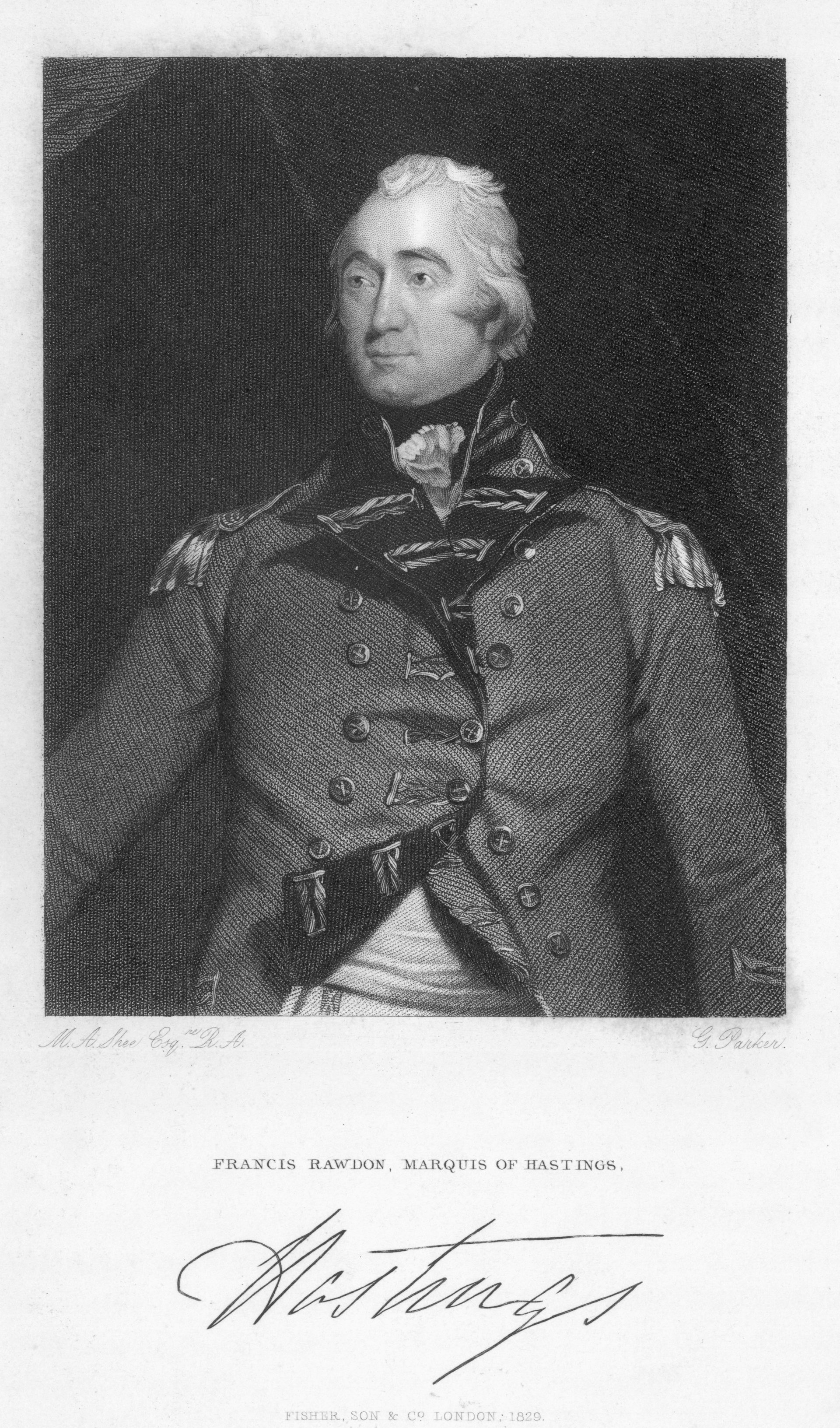
“All Gentlemen Natives of Ireland are invited to join the Volunteers of Ireland, commanded by their Countryman, Lord Rawdon,” the ad announced. Francis Rawdon, the scion of a wealthy Anglo-Irish Protestant family from County Down in the north of Ireland, was a dynamic army officer in his mid-20s and the perfect figurehead for this new regiment.
Later that evening, these Irish loyalists celebrated St. Patrick’s Day “with their accustomed Hilarity,” noted a local journalist. Lord Rawdon’s Volunteers of Ireland regiment led the way with a parade, followed by a banquet.
“The soldierly Appearance of the men, their Order of March, Hand in Hand, being all NATIVES OF IRELAND, had a striking effect,” gushed the New-York Gazette. Being “naturally gallant and loyal,” the Irish will always “crowd with Ardour to stand forth in the Cause of their King, of their Country, and of real, honest, general Liberty.”
To be Irish in New York in 1779 meant being loyal to the crown. But when the British evacuated New York four years later, they took their red coats – and their loyalist St. Patrick’s Days – with them.
In time, memories of these pro-British parades and banquets proved unseemly in the fledgling republic. They were subsequently written out of most histories of Irish America. The official website of the world-famous Manhattan St. Patrick’s Day parade, for example, makes no mention of these loyalist processions.
Yet taking a closer look at these forgotten chapters of history is important because it reminds us that there has always been a debate over what it means to truly “be Irish” in America.
In the 1770s, it was a conflict over loyalty to the crown. Today, it can mean disagreements about abortion, gun control or immigrants’ rights.
The truth lies buried in the many stories of Irish America.
This article is republished from The Conversation, a nonprofit, independent news organization bringing you facts and trustworthy analysis to help you make sense of our complex world. It was written by: Cian T. McMahon, University of Nevada, Las Vegas
Read more:
10 things to know about the real St. Patrick
The truth about St. Patrick’s Day
How a 22‑year‑old George Washington learned how to lead, from a series of mistakes in the Pennsylvania wilderness
Cian T. McMahon received funding for this project through a Hibernian Research Award from the Center for the Study of American Catholicism (CUSHWA).
















































Comments