Trump’s thumbs-up to Irish reunification breaks with precedent, but evokes earlier age of White House support
Published in Political News
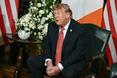



Donald Trump is a Republican and self-avowed nationalist. That, apparently, is true in an Irish sense, too – even if those terms have very different meanings across the Atlantic.
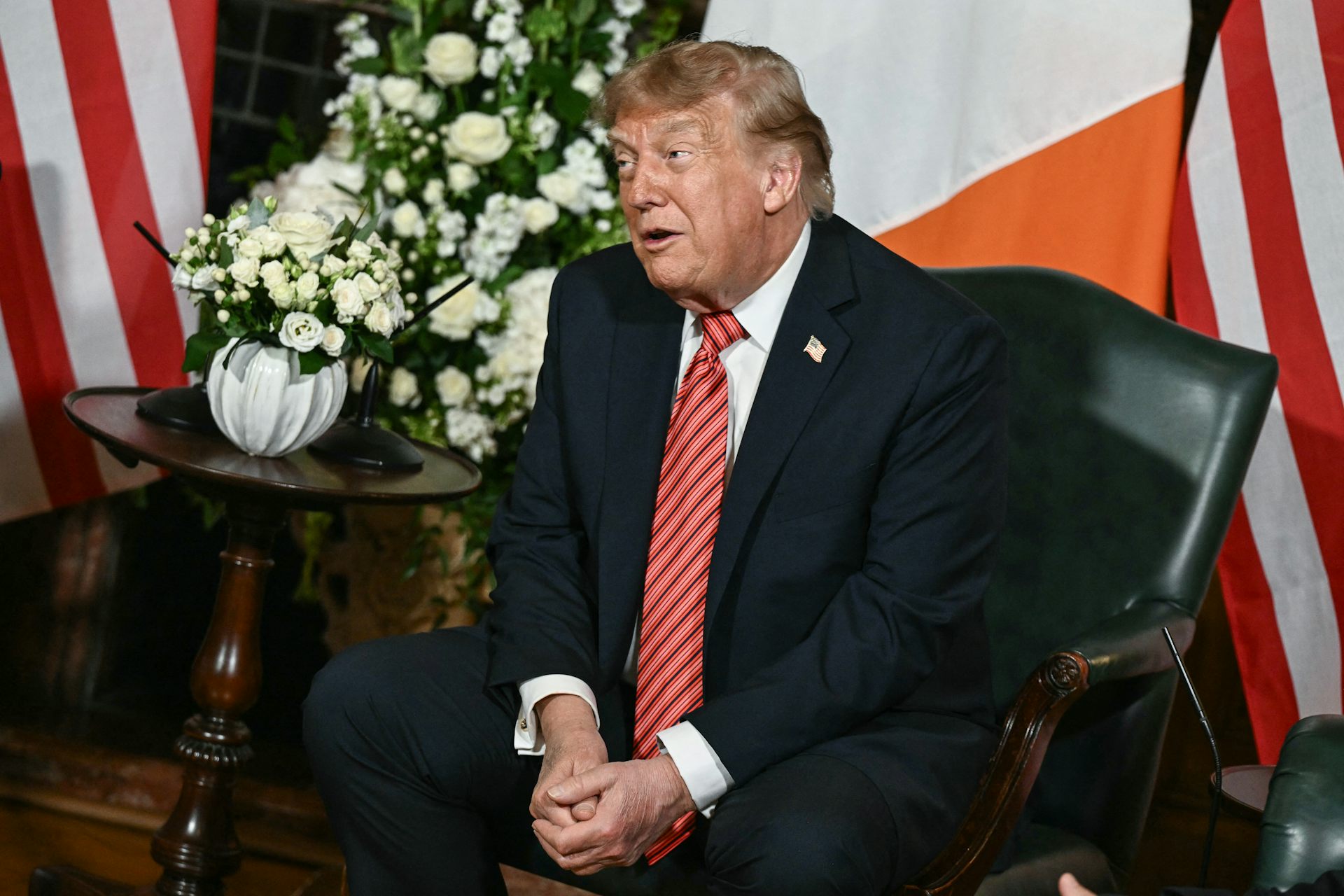
On Sept. 12, 2026, while seated next to taoiseach, the Irish title for prime minister, Micheál Martin, the U.S. president stated that he would “love to see” Ireland unified and that it is “going to happen eventually,” so it “may as well happen now.”
The next day he called reunification “a cool thing” but noted, “No matter what you say or how you say it, there’s no good answer.”
While such comments may have been welcomed by some supporters of unification both in the Republic of Ireland and Northern Ireland – or “republicans” and “nationalists” in Irish political parlance – Trump’s comments were generally denounced by all parties, including the taoiseach.
The comments likewise set off a firestorm among Northern Irish unionists, who wish the region to remain part of the United Kingdom, as well as British conservatives and Trump allies such as Nigel Farage, who likewise insist that Northern Ireland should always remain part of the United Kingdom.
As an expert in Irish-American history, I view Trump’s comments as a break from recent precedent.
Since the 1998 Good Friday Agreement – which politically resolved the rumbling civil war known as the Troubles and achieved cooperation between the North, the Republic, and the U.K. – U.S. presidents have formally adopted a policy of neutrality when it comes to the question of Irish unification. Instead, Trump’s intervention hearkens back to an earlier age in which American presidents were often more opinionated on the issue of Irish nationalism.
Ireland first became a colony of Britain in the 12th century and regularly faced discriminatory polices, such as 17th- and 18th-century penal laws, which prevented Catholics and, to a lesser degree, Presbyterians from entering the upper tier of the socioeconomic strata, which led to widespread anti-English sentiment on much of the island.
Irish nationalism, which called for independence from Great Britain, became popular during the late 18th century, around the same time American colonists defeated the British after declaring an independent United States. Many Irish had already emigrated to the American colonies, but immigration would increase dramatically during the 19th century as Ireland faced famine and disease.
Irish, and especially Irish-American, nationalists tended to look at America as a model and possibly an ally in obtaining independence. As such, they often promoted their agenda to U.S. presidents.
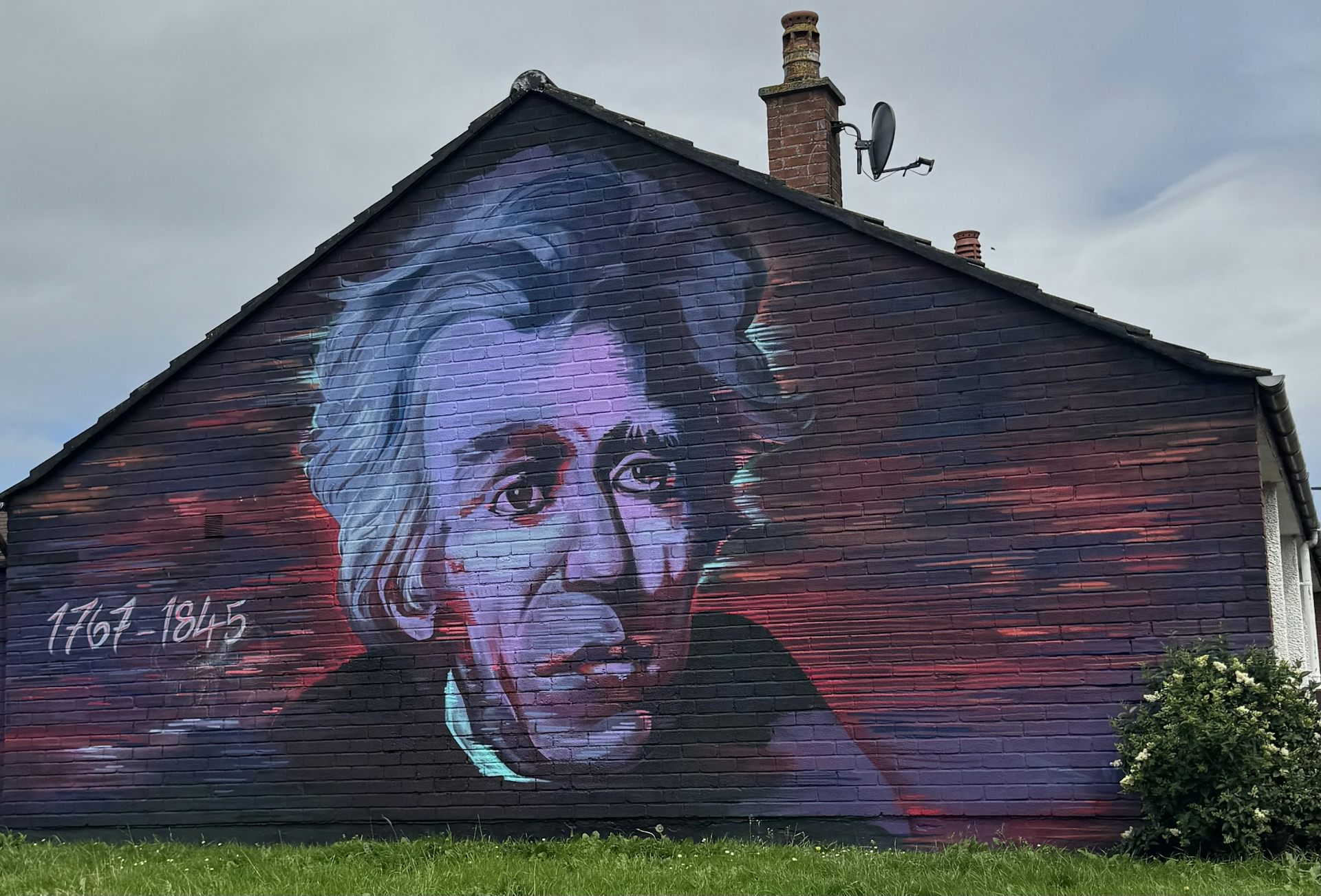
Andrew Jackson, whose parents emigrated from Carrickfergus, County Antrim now in Northern Ireland, was the first president of Irish ancestry. In 1833, he pronounced to the Charitable Irish Society in Boston, “I have always been proud of my ancestry, and of being descended from the noble race.”
In an 1842 letter to Thomas Mooney, an advocate of Irish independence in New York, Jackson wrote: “That the Irish blood which flows in my veins will never cease, but with my life alone, to beat in unison with those who have at heart the very security of Irish liberty.”
However, Jackson’s words, while likely sincere, never resulted in a tangible policy or action to assist Ireland.
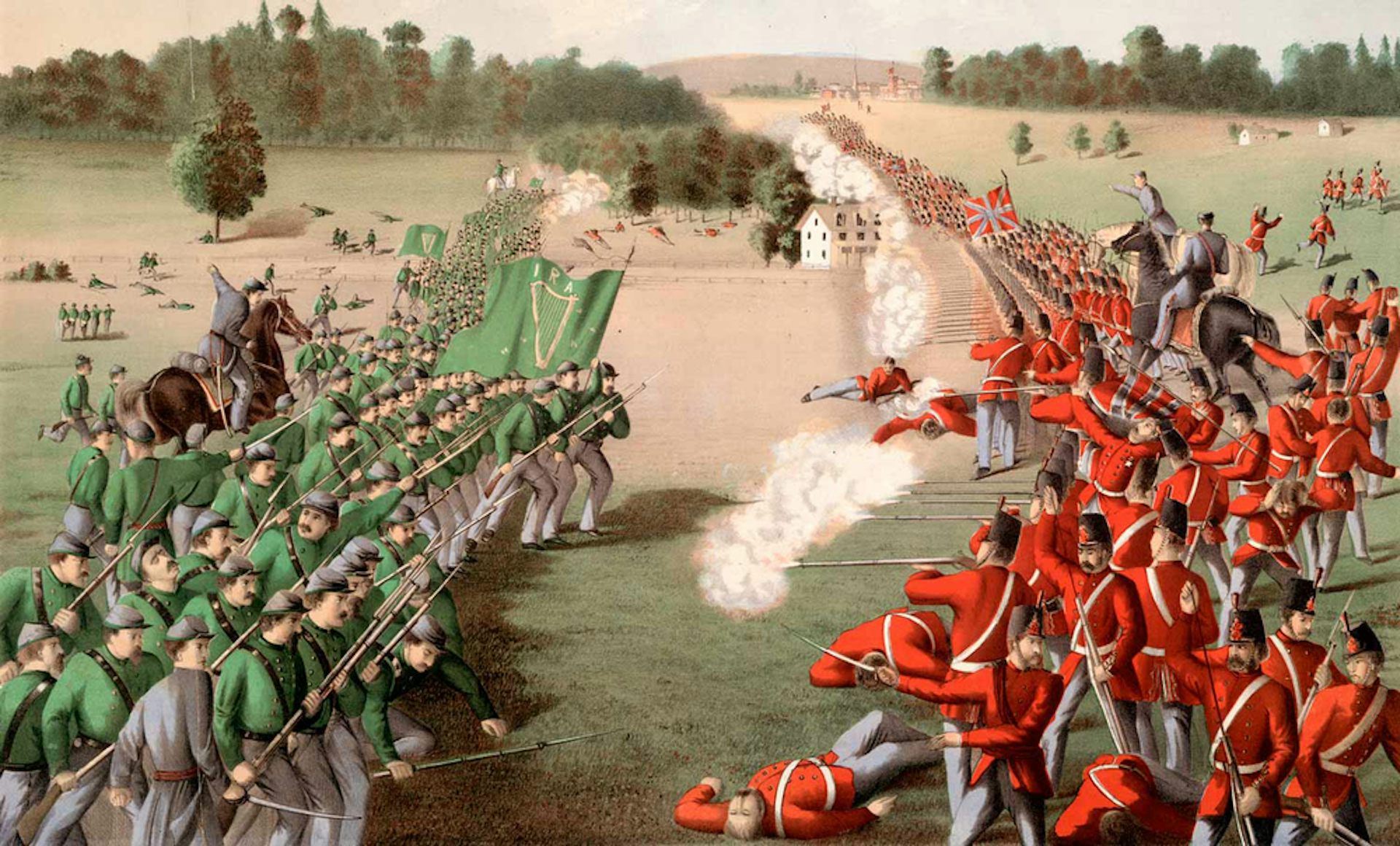
The Irish revolutionaries the Fenians, also known as the Irish Republican Brotherhood in the United States, appealed to a succession of U.S. presidents for assistance without success. Formed in the late 1850s and popularized after the American Civil War, Fenians had hoped that Andrew Johnson, and later Ulysses S. Grant, would support an Irish revolution.
Hoping to benefit from American-Anglo tensions during the Civil War, in which the British unofficially supported the Confederacy, the Fenian Bernard Killian claimed that Johnson and his secretary of state, William Seward, had privately assured him that they supported a Fenian invasion of Canada, then a colony of Great Britain.
The Fenians hoped that a successful invasion might lead to a war between the U.S. and U.K., which would result in a free Ireland. But both Johnson and Seward publicly refuted Killian’s claim. But their need for Irish votes in the upcoming 1866 midterm election might explain their private support.
Regardless of the conflicting versions of the conversation, when the short-lived invasion took place in 1866, Johnson had many of the Fenians arrested for violating neutrality laws.
Most 19th-century Irish Americans supported the Democratic Party because the Republican Party was widely seen as anti-Catholic and xenophobic.
However, Grant, a Republican, became president in 1869 with the support of many Irish Americans, especially Fenians who had fought for the Union in the Civil War.
They hoped that his frustration with the English during the war would lead to his support of independence in Ireland. Once again, they found a president unwilling to assist their conquest of Canada or even their filibustering excursions into Central America and Cuba, where rogue groups hoped to annex territories to become part of the U.S.
President Woodrow Wilson hoped that the mass slaughter of World War I would lead to dramatic reform that would prevent future atrocities. In his Fourteen Points, Wilson exclaimed, “It’s the principle of justice to all peoples of all nationalities, and their right to live on equal terms of liberty and safety with one another whether they be strong or weak.”
Unfortunately, Irish nationalists such as John Devoy, excited at the prospect of British decolonization, soon discovered that Wilson’s vision of self-determination was far less universal than he had implied.
Supporting their wartime British ally, Wilson and the U.S. declined to support the Irish nationalists during the Irish War of Independence between 1919 and 1921. In 1922, the Anglo-Irish Treaty created the Irish Free State – now the Republic – and partitioned it from Northern Ireland, which remained part of the United Kingdom. After a brief civil war in Ireland between pro-treaty and anti-treaty forces, U.S. President Calvin Coolidge established relations with the Free State government in Dublin, infuriating the anti-treaty Irish Republican Army.
John F. Kennedy, the president most associated with his Irish ancestry and the first sitting president to visit Ireland in 1963, mostly avoided the question of unification as president – although he was quite outspoken in favor as a senator. But he did note to the Irish parliament, “No people ever believed more deeply in the cause of Irish freedom than the people of the United States.”
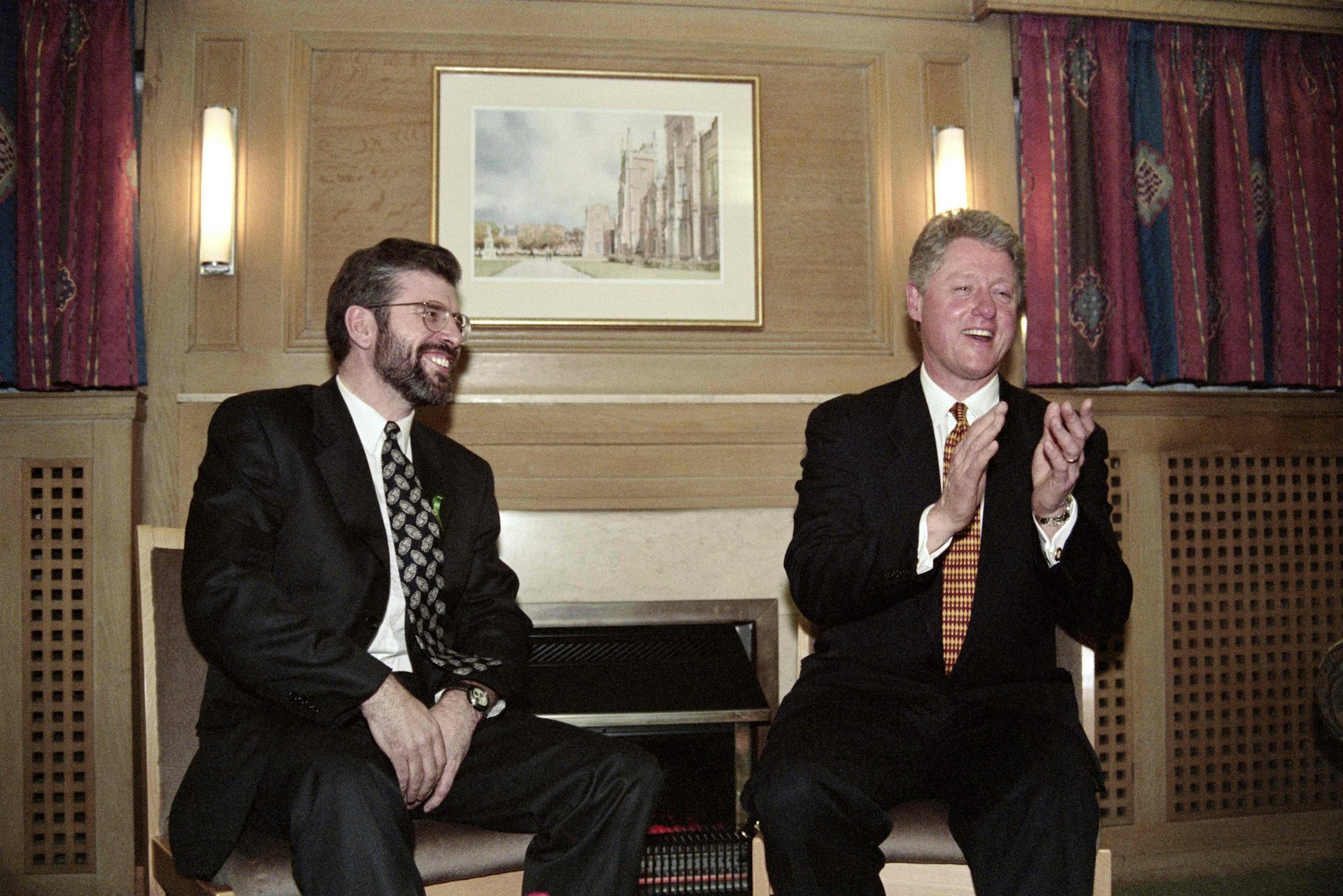
During the Cold War, U.S. presidents were reticent to support Irish unification in order not to upset their British allies. But after the Cold War, President Bill Clinton invited Gerry Adams, the head of Sinn Fein – widely seen as the political arm of the IRA – to visit the White House, despite the protests of British Prime Minister John Major.
Eventually, Clinton would become an important part of the process that led to the Good Friday Agreement, partially due to his avowed neutrality on the question of unification. Presidents since have continued to adopt a policy of neutrality.
Trump, who has been compared to Andrew Jackson for his lack of conventional diplomacy, perhaps unsurprisingly has now agreed with Jackson that Irish independence would be good for the Irish people.
Although unlikely familiar with this history, he has perhaps unintentionally sided with past presidents as well as the people who live on the island. In a recent European Union poll, 63% of people in Northern Ireland said they would vote for unification, while 59% of the people in the Republic would support it.
Still, 29% of the Northern Irish and 22% of the Republic oppose it. And given the vocal opposition of the British government, unification is not likely to happen soon, no matter what the U.S. president wants.
This article is republished from The Conversation, a nonprofit, independent news organization bringing you facts and trustworthy analysis to help you make sense of our complex world. It was written by: Bryan McGovern, Kennesaw State University
Read more:
How ‘portfolio reasoning’ explains Trump’s constant reevaluation of America’s value
Pisa results: England bucks global decline in reading and Wales falls behind
Why the Supreme Court blocked Trump and the Postal Service from restricting mail‑in voting for the midterms
Bryan McGovern does not work for, consult, own shares in or receive funding from any company or organization that would benefit from this article, and has disclosed no relevant affiliations beyond their academic appointment.











































Comments