Commentary: Democracy can be surprising, as elections around the world show
Published in Political News
On America’s Election Night 10 years ago, I was a diplomat with the U.S. mission to Somalia in Mogadishu. We were hosting a watch party with local political, business and civil society leaders. U.S. elections offer a chance to showcase how democracy works and to share American values, so these watch parties are a public diplomacy staple at embassies all around the world.
With the later time zone, our party kicked off around 4 a.m. By sunrise, it was clear Donald Trump would be the next president, and I was concerned about what this meant for America’s relationship with the world. But, as a U.S. official, I couldn’t share my concerns publicly. I represented the U.S. government there, not myself. As guests looked to me and my colleagues for a reaction, I searched for the right words and settled on a truth that wasn’t very reassuring at the time: “Democracy can be surprising!”
It is one of the risky and beautiful things about democracy. A wave of ordinary people can come together, organize and choose their government, for better or for worse. When it works as it’s supposed to, the people retain the ability to change that government, or not, depending on which party or person they believe is more likely to deliver. When democracy works, nothing in an election is a foregone conclusion.
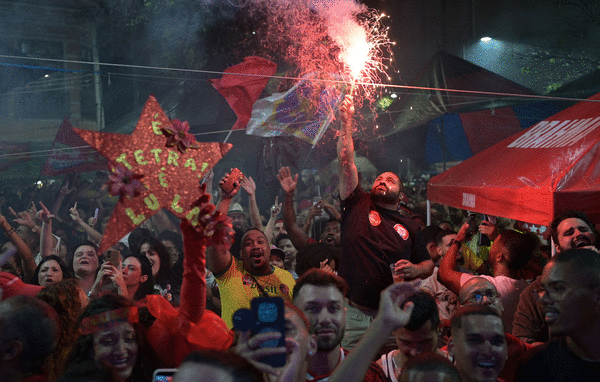
Just this week, two countries showed us how this is done. Brazil and Serbia proved to the world that, even on an uneven electoral playing field, a mobilized public can prevail. Success in each case hinged on having enough public engagement to drive voter turnout to levels sufficient that the people could overcome the advantages of big money, Big Tech and entrenched power.
In Brazil, President Luiz Inácio Lula da Silva showed the world that trends are not destiny. Seven straight presidential elections across Latin American in the past 18 months have seen swings to the right. In five, an incumbent was ousted by a public dissatisfied with the status quo. Youth movements across the globe also have rejected geriatric politicians who had long dominated politics, accusing them of being hopelessly out of touch with the problems young people face. Lula, an 81-year-old incumbent and a fixture of Brazil’s left for decades, looked doomed.
And yet, even after falling short of his opponent, Flávio Bolsonaro, in the first round of voting, Lula surged ahead in the runoff to win by more than 4 million votes. The possibility of a win by the far-right son of a former president convicted of attempting a coup was apparently a strong motivator.
Lula prevailed despite widespread efforts by the Trump administration to undermine his government. He overcame Meta’s restriction of his social media accounts and promotion of his opponent’s. His supporters even faced public transportation disruptions that Lula’s coalition claimed were intentional suppression by powerful mayors who supported Bolsonaro. Lula overcame these obstacles with sheer people power, thanks to a 10 million-person-strong digital army organized over WhatsApp focused on getting his campaign message out.
Some big business interests are not pleased with this outcome, since Lula has promised to hold Big Tech to account and to protect the Amazon from deforestation. But this is a clear win for humanity. As renowned climate activist Bill McKibben put it, “I bet (Lula’s win) shaves a tenth of a degree off how hot our earth eventually gets, which will save millions of lives.”
On the very same day in Serbia, people power ousted an autocrat who had dominated the country’s politics for 14 years. The movement that brought down Aleksandar Vučić was launched in 2024 when a railway station roof collapsed, killing 16 people. Students blamed rampant state corruption, and their mass protests persisted in the face of violent repression. The students turned their activism into a political movement and put forward a list of candidates to compete in the parliamentary election this year. They came up against an entrenched regime that had spent its years in power exerting control over media, the judiciary and other state institutions key to obstructing political opposition. This meant their path to electoral victory faced an uphill, unfair fight.
It took almost two years of organizing and commitment, but just like the defeat of Viktor Orbán in Hungary earlier this year, their victory Sunday was proof autocrats still can be ousted as long as elections are still happening.
The hardest part for both movements may still lie ahead. Governing is difficult, and both countries face economic struggles and dissatisfied electorates. Every government in a democracy must eventually go back to face the people and be judged on whether it delivered.
It has been U.S. policy for 80 years to promote democracy around the world to ensure that very fact. Right now, this is our payoff. Even as Americans face efforts to disrupt the vote here, this idea has taken root in populations elsewhere who fight for it.
These movements offer hope. Americans who are concerned today about the rampant corruption of our political system and capture of our economy should take note, show up and make sure their voices are heard in our own elections next week.
____
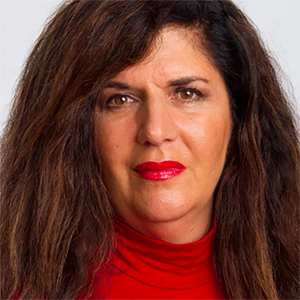
Elizabeth Shackelford is a foreign affairs columnist for the Chicago Tribune and a distinguished lecturer with the Dickey Center at Dartmouth College. She was previously a U.S. diplomat and is the author of“The Dissent Channel: American Diplomacy in a Dishonest Age.”
___
©2026 Chicago Tribune. Visit at chicagotribune.com. Distributed by Tribune Content Agency, LLC.







































Comments