Drivers feel angry, betrayed as NYC council poised to pass Central Park horse carriage ban
Published in News & Features
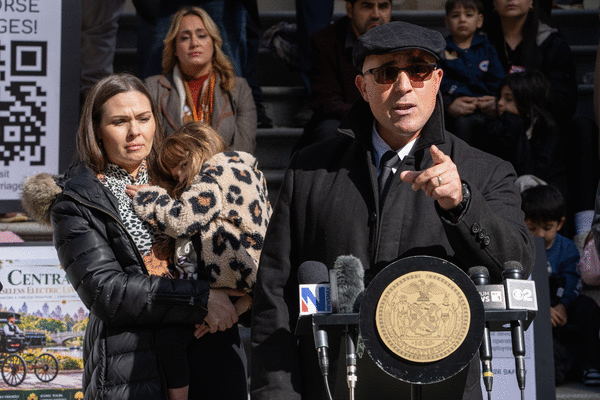
NEW YORK — When Medet Fidian spent $310,000 on one of New York City’s 68 horse carriage medallions in 2022, it was his second shot at the American dream. His first was driving a yellow cab after arriving here from Turkey in 1996.
“When you say ‘New York,’ the first thing that comes to your mind is Lady Liberty — and then a yellow taxi,” the 56-year-old told the Daily News this week. “I did not think there was a chance they were going to kill [that] business.”
But Fidian was pushed to the edge of bankruptcy when his investment in two taxi medallions plummeted from $1 million per medallion to less than $200,000 when app-based rideshare services arrived in the city. Seeking a way forward, he turned to another quintessentially New York medallion-based business — driving horse-drawn carriages in Central Park.
“To be in Central Park all day is priceless — you have an office in the middle of the best design masterpiece of [Frederick Law] Olmstead,” Fidian said.
But Fidian’s job — and that of hundreds of other drivers, medallion owners and stable hands — is expected to be wiped out Thursday as the City Council is expected to outlaw the industry amid growing concerns over safety.
The council bill, Romanch’s Law, is named for the 18-year-old boy who was killed jumping from a runaway horse-drawn carriage in June. It would cease the issuance of new carriage-horse licenses and outlaw the industry entirely by the summer of 2028. The expected passage of the bill into law this week has been heralded by animal rights activists — some of whom argue that making a horse pull a carriage in inherently abusive to the creature — as a long-overdue victory.
But a massive hole in the bill, many of those who work in the industry argue, is the lack of any clear compensation for those who have invested millions in medallions, horses and carriages to support an industry the city authorized and long regulated. The bill nods at the issue, but there are no dollars on the table for those whose investments are about to become worthless.
“This is the second time I’ve been victimized by City Hall,” said Fidian, who also owns two horses, Hamilton and Maradona.
Vague assurances
In announcing the ban, Mayor Zohran Mamdani said any effort to wind down the industry should include steps to find jobs and economic security for those who the ban would put out of work.
As previously reported by the Daily News, the most recent revision to Romanch’s Law — the result of talks between the council and the mayor’s office — would require the city to establish an “industry transition plan” by April 2027. That plan would be expected outline steps to help carriage horse workers secure new jobs, including at regional transit agencies or in tourism roles.
The law would also require “consideration of whether to establish a program to compensate horse drawn cab owners for the value of their horse drawn cab businesses, horse drawn cab licenses, and equipment.”
But that’s language carriage horse owners and drivers find uncomfortably imprecise. The union representing the drivers, TWU Local 100, has blasted that aspect of the bill, among others and is threatening to sue should the measure pass.
“This is how we feed our families,” said Frank Riccobono, an owner and driver with 20 years in the business. “And now we’re going to be in a big financial crisis and there’s no language promising any figure like a buy-back program or an alternative business.”
“At the end of the day, we’re Central Park tour guides. That’s my profession, whether it’s on a horse or on foot,” Riccobono said about the bill’s promised transition plan “How do you go from that to driving a school bus or whatever?”
Riccobono, 39, said he started driving at the age of 18, working for his father in the family business. He owns 11 horses and three medallions — the most recent of which cost him just shy of $400,000, he told The News.
“It’s like my American dream was happening, and now the Americans are shattering my American dream,” he said. “We’re very scared. I haven’t slept. I don’t want to wake up in the morning. I’m depressed.”
Calculating the loss
Compensation, should the city decide to pursue it, is a complicated endeavor. The value of the city’s 68 horse-carriage medallions fluctuates. Similarly, the value of the horses, which the law would require them to sell. Owners told the News they’ve purchased their horses for prices between $4,000 and $15,000 depending on their age, breed and training.
And compensation of the business owners for their medallions, carriages and horses will do little to help the drivers they employ or the hands employed by the city’s three carriage horse stables.
Riccobono, a father of two, said he drives 6 days a week, and he employs seven other drivers as part of his business.
“I have seven employees, and they have families and children as well,” he said. At least three of his employees have been driving horses for roughly 40 years, Riccobono said. “This is all they know.”
“They zero equity,” he said. “What are they going to move to another state to go drive a horse? Their whole families are based in the five boroughs.”
Fidian, who emigrated from the Kurdish region of Turkey, said he worries about the dozen or so stable hands he pays to care for his two horses. “Forget about the money, the human side of the story is really tragic,” he said.
For Riccobono, the answer would be to allow the industry to continue — simply without horses.
“If I show up to the park with my carriage, without the horse, why would it be illegal?” he said. “That’s the way I’m looking at it.”
Riccobono said he’s hoping to get the chance to us his medallion to give tours with slow-moving electric vehicles — an option that’s been floated by Gotham’s carriage-horse opponents in the past, and was used in Turkey to replace carriage horses in Istanbul.
“If I show up in the park and [my carriage] is electrified, what’s the problem then, right?” Riccobono said.
“The value of us being able to provide tours in Central Park is what I bought,” he said of his medallions. “I bought a business in Central Park — they cannot strip the business from me.”
“I’m losing faith in the whole democracy and the whole way the government works,” Riccobono said. “I pay taxes all these years, and its embarrassing — it’s embarrassing to call myself a New Yorker.”
-------------
©2026 New York Daily News. Visit at nydailynews.com. Distributed by Tribune Content Agency, LLC.


Comments