Measles cases reach 42 in rural Minnesota amid outbreaks
Published in Health & Fitness
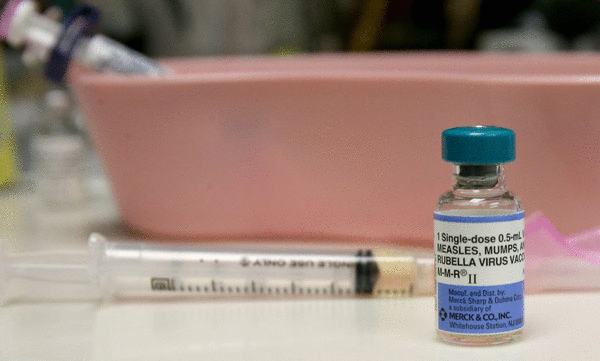
MINNEAPOLIS — Minnesota has confirmed another 18 cases of measles in the past week — one of its highest single-week totals in decades — amid two ongoing outbreaks in the state’s least-vaccinated counties.
“The case count will very likely grow in the days and weeks ahead,” the Minnesota Department of Health warned in a written statement, which also urged unvaccinated residents to seek out shots.
Thursday’s updated tally raises Minnesota’s total for the year to 42, the third-highest annual total since at least 2017. The state reported 57 cases in 2024 and 75 in the 2017 outbreak that centered in child-care facilities in Minneapolis.
All 18 new cases were reported in Todd County in north-central Minnesota, one of two clusters of measles activity along with Fillmore County in the southeast part of the state. The state reported six cases in Fillmore last week but none there this week.
The two counties have the state’s lowest measles vaccination rates among children born in 2023, according to the latest state data, partly because they are home to large Amish communities in which many have religious opposition to the shots.
State officials declined to identify whether any of the measles cases involved Amish residents in those counties, though.
“There have been more than 4,000 confirmed cases in the U.S. this year,” the Minnesota Department of Health’s statement said. “In our highly mobile society, that means exposure can occur in any community, in any county. There are pockets of unvaccinated or under-vaccinated people across Minnesota, and anyone who isn’t vaccinated against measles is at risk — especially right now.”
Minnesota rarely had more than two cases of measles a year from 1997 through 2016 — and they generally involved infections that occurred overseas — because more than 90% of residents had been vaccinated.
The current measles-mumps-rubella vaccine is recommended in two doses, the first by 15 months of age and the second by age 6, and is considered 97% effective at preventing infection with the measles virus. But in Minnesota, only 81% of children born in 2023 have received at least one dose by age two. That rate drops below 67% in Todd and Fillmore counties.
All those who developed measles in Minnesota this year were exposed in the U.S. to the virus, one of the most infectious agents on the planet. Viral droplets can linger in the air long after infected individuals have spread them by talking, coughing or sneezing.
The ease with which the virus spreads was apparent in Minnesota in 1991, when an infected person on the playing field of the Metrodome for a Special Olympics event spread the virus to fans sitting high up in the stands.
Measles is known by its head-to-toe rash, but it can also cause severe fevers and respiratory symptoms. Minnesota has yet to report any cases that required hospitalizations this year, even though one in 10 infected people usually needs that level of care.
Nationally, the U.S. so far this year has confirmed two deaths and 414 hospitalizations out of 4,080 measles cases, according to the Centers for Disease Control and Prevention.
About 95% of U.S. cases involved people who have received no measles vaccine. An outbreak of 207 cases in Wisconsin so far this year ranks fourth-highest among states.
More than 1,000 cases have been reported in Pennsylvania, where reports suggest a substantial number of cases are among Amish and Mennonite residents and the total could be obscured by parents in those communities treating children with milder cases at home.
______
©2026 The Minnesota Star Tribune. Visit startribune.com. Distributed by Tribune Content Agency, LLC






Comments