Miami condo owners kicked out illegal short-term rentals despite city's fumbling
Published in Home and Consumer News
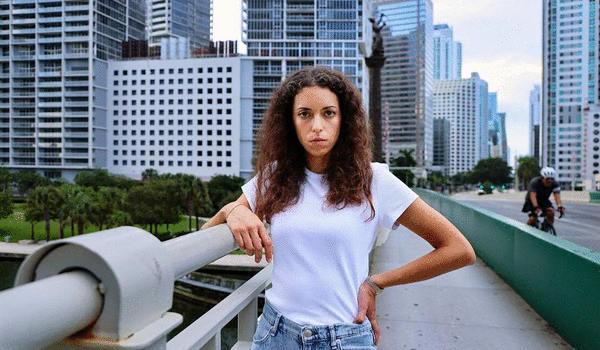
Carolina Sanchez-Hervas feared her dream of a Manhattan lifestyle in the Miami sunshine was dying when her condominium board president suddenly thrust his face within an inch of hers, fists cocked behind his back.
“You’re a liar!” he shouted.
She recoiled as her husband stepped between them.
The quest to rescue her Brickell condo had turned ugly.
Two groups were standing outside the lobby of their building in the midnight aftermath of a bitter election. The president had planned to convert the condo into an Airbnb hotspot with his two fellow board members. They lost. Sanchez-Hervas and her plucky neighbors won.
After a three-year fight against homeowners association leaders and the city of Miami, they had finally repulsed an invasion of guests who they said partied naked in their swimming pool, vomited in their elevators, carried guns in their hallways, karate-kicked their doors, propositioned their daughters, passed out on their lobby sofas, posted unseemly escort service videos from their balconies and blasted music until dawn. A new board promised to abolish illegal short-term vacation rentals and restore peace.
But in that moment of victory, Sanchez-Hervas began to doubt if she wanted to live at Brickell on the River South.
“We’re stuck in a trashy reality show,” she said. “It doesn’t feel like home.”
The crusade that prevented the 46-story condo tower at 41 SE Fifth St. from becoming a hotel could serve as a how-to manual for other angry Miami condo owners who find themselves sleeping — or attempting to sleep — next door to strangers booked into short-term rentals for $500 per night.
Yet the reclamation of Brickell on the River South came at a cost, borne by residents and necessitated by Miami City Hall’s failure to enforce the law. Unregulated, unregistered and untaxed, these stealth hotels have spread helter-skelter in buildings and neighborhoods where they are forbidden, the Miami Herald found.
Instead of intervening to stop the vacation rentals, Miami leaders let the problem fester. City building department officials even undermined residents’ efforts by meeting or corresponding with board members and Airbnb hosts to devise a strategy for permissible short-term rentals. The board never informed residents of their communication with the building department.
Frustrated by the city’s inaction, Sanchez-Hervas and her neighbors conducted their own investigation of illegal Airbnbs. They discovered how hosts skirted the minimum 30-day rental period by submitting sham 30-day leases. They collected police reports, scoured property records, studied Airbnb listings. They filed complaints, called Miami code compliance, zoning, building and legal department officials and testified at a Code Enforcement Board hearing. They told their property manager and front-desk staff to stop check-ins.
Still, the guests kept coming, accompanied by the clatter of rollaboards and the skunky scent of marijuana.
“They’re throwing liquor bottles from balconies onto the pool deck,” Sanchez-Hervas said. “They’re leaving condoms in the jacuzzi.”
Desperate, Brickell on the River South residents hired a lawyer. They sued their own HOA board.
The stress from the conflict affected her health. Her career suffered.
“Illegal rentals are a disease,” she said.
Money migrates to Miami, Airbnbs boom
In another condo just seven blocks south, Brickell on the River residents saw a blaring alarm. Wild guests had turned The Club at Brickell Bay, a 43-story tower where 85 percent of the units are rented illegally on Airbnb and similar platforms, into “Animal House.”
After the Miami Herald chronicled chaos at The Club, the city ordered all illegal lodging to “cease immediately” and cited board members — none of whom live at The Club and all of whom are in the Airbnb business — for operating an illegal hotel.
“We put our life’s savings into our condo and it could become just like The Club,” Sanchez-Hervas said. “We’re subsidizing hosts’ for-profit businesses with our fees for repairs and upkeep.”
The uncivil wars inside The Club and The River are being waged across South Florida, where a migration of wealth since the COVID pandemic has turbocharged the latest real estate boom, propelling Miami to the top of the unaffordability charts, turning homes into investment portfolios owned by out-of-towners and displacing longtime locals from their neighborhoods.
Miami has become more expensive than New York for anyone who isn’t a billionaire. The 75-story Baccarat Residences - “where life forever sparkles” - will soon block the morning sun on the River’s pool deck. Penthouses are selling for $31 million.
With Brickell at its hub, Miami has become one of the world’s most popular Airbnb destinations. Its gleaming towers are bordered on the north by the Miami River — former industrial eyesore plied by rusty freighters; today, runway for a parade of tour yachts with sunburned passengers twerking on the bow to music so loud it drowns out the cranes’ racket.
“People visit New York for the culture, San Francisco for the scenery, Boston for the history,” said Claudia Garcia, a leader of the opposition to illegal short-term rentals at The River. “People come to Miami to party.”
One Airbnb superhost who owns seven condos at The River and The Club — including one ranked No. 4 on Timeout’s list of the Best Airbnbs in Miami — argues vacation rentals are a boon for investors and residents alike.
Richard Ostertag’s social media videos trumpet how through “work, blood and tears” he’s built a business that brings in $81,000 per month — and you can, too!
Condo owners can make money legally renting long term. Or, they can make twice as much illegally renting by the night.
“It’s Miami. Greed is good,” said Ernesto Cuesta, president of the Brickell Homeowners Association.
A loft on the Miami River
Sanchez-Hervas, 36, a Tallahassee native, and her husband, a native of Russia, met as young tennis pros in Spain. They settled in New York City’s Murray Hill neighborhood, where doormen know residents by name.
In 2015, they moved to Miami, an ideal city for Sanchez-Hervas to run her translation business and her husband to run his sports agency. They fell in love with Brickell’s walkable Manhattan flavor and a 17th-floor loft at Brickell On The River South.
By 2024, that love had curdled. By then, about 80 of 327 units in the building were operating illegally as Airbnbs, and checkins exceeded 1,100 per month, according to rental records from the property manager obtained by residents. Police were called 308 times during a 12-month span, police records reviewed by the Herald show.
Sanchez-Hervas, Garcia and a group of neighbors resolved to halt the onslaught. They did not know that recapturing their home would ruin their lives.
First, The River’s HOA lawyer announced that rentals of less than 30 days must cease.
Miami 21, the city’s zoning code, prioritizes preserving the character of neighborhoods and prohibits transient rentals in condos unless they have a Certificate of Use to operate as a condo-hotel. That CU is granted only if the building conforms to strict rules that govern hotels, such as fire, safety, security, accessibility, engineering and environmental regulations.
That means The River — the entire building, not just individual units — would have to undergo costly modifications and pass a rigorous set of inspections to be approved as a condo-hotel.
Sham 30-day leases
Hosts adapted and played a shellgame: sham 30-day leases. A guest booked a unit for a month but had to depart early after a weekend stay — the guest got “sick” and the lease was canceled. Then, the host cleared the calendar for a new guest — who had to leave early.
The con infuriated Sanchez-Hervas and her neighbors. Undaunted, they became sleuths.
To gather evidence, they spent long nocturnal hours cross-referencing property records and incorporation filings, matching photos of units from online Airbnb listings — which don’t provide addresses — with photos from MLS sales reports. They learned to search vacation sites as fluidly as concert pianists play Chopin’s nocturnes. They figured out how to recognize certain units by the furniture or wall art. There was the “red couch” unit, and the “Miami skyline poster” unit.
They collected Instagram posts of models posing by the fountain in The River’s lobby or on balconies. One woman bursting out of her bikini top advertised, “If you wanna be the boss you gotta pay the price.” Another in knee-high boots who called herself Kashmere Goddess sent out “Miami Vibez.” They traced the posts to OnlyFans accounts.
The condo detectives took photos and videos of guests, and talked to them about their stay. They found out guests picked up keys at a Metromover station lockbox, or at Friend’s Bistro across the street, and stowed luggage at a nearby dry cleaners.
Jorge Castillo, an anti-Airbnb board officer at that time, requested a new property manager from Miami Management to help ferret out the subterfuge, Erich Leyva.
“The clientele we had — half-naked, drunk party groups who feel entitled causing property damage,” Leyva said. “We had to hire extra security and extra staff to handle the circus.”
Hosts would submit a 30-day lease to the office and “just break it and break it and break it,” said Leyva. “OK, guess what, it’s not the Swenson family anymore. Now it’s the Smiths from Kansas, and then the Perez couple from Mexico, then six, eight, 10 friends from New York.”
Homeowners do their own detective work
Leyva made a spreadsheet tracking activity in 39 of the 80 units operating as Airbnbs. He delivered evidence to the city on a hard drive.
A new, pro-Airbnb board was elected after campaigning on a platform that Airbnbs attract investors and increase property values: President Paul Bolduc, Vice President Geoff Bain (who was re-elected) and Secretary-Treasurer Amal Elsheemy.
Bolduc, a pilot, Bain and Elsheemy own vacation rentals in the building. Bain used to rent out a unit at The Club, where he was vice president during its conversion to an Airbnb playground. Elsheemy, a Long Island real estate agent, is a 4.75-star Airbnb host of a Harlem duplex.
When Bolduc found out anti-Airbnb owners and Leyva were reporting hosts to the city, he castigated Castillo for being a snitch.
“This is the kind of garbage that needs to stop,” Bolduc wrote in emails the Herald reviewed. “This needs to be handled by our board without going to the city.
“Do you think you should f— over your neighbors’ financial investment?”
But it was too late. The evidence they’d turned in couldn’t be ignored.
City inspector Erik Encinosa pounced on a Sunday night. He taped citations from the city on 16 doors at The River: UNLAWFUL LODGING.
The next morning at 8:30, Leyva said, he found two of his Miami Management supervisors and Bain in his office sitting at his desk and going through records.
Bain and the supervisors demanded copies of the files he gave the city. They fired Leyva on the spot, Leyva and Bain said. Bain said Leyva was fired for poor job performance and making mistakes on the budget.
“I was collateral damage, but I did what I was hired to do, I did the ethical thing,” Leyva said.
A reckoning for Airbnb hosts: Guilty
The cited Airbnb hosts were summoned to a Code Enforcement Board hearing at Miami City Hall in February 2025.
They were forced to confront three dozen fuming residents and faced fines that could mushroom into liens. Most hosts pleaded not guilty, arguing they had been misled into believing vacation rentals were perfectly legal by real estate agents, board members, the property manager — and, in an explosive revelation, by city officials themselves.
Residents found an ally in Code Enforcement Board chair Yvonne Bayona, who is president of the Miami Historic East Shenandoah Homeowners Association, where she said houses rented to party promoters and sex traffickers are “a plague.”
“Airbnbs are overtaking our neighborhoods, including mine,” Bayona said.
Resident Idamar Siverio said drunk guests accosted her and her teenage daughter, and blamed management for giving out key fobs like candy.
Roberto Guzman testified about seven women in 1302 for a bachelorette party. And how a man bullied a woman: “He was grabbing her really strong. He was forcing her. The lady was drunk and she fell and she started puking on the floor right in front of the elevators.”
Another owner recounted how a barking dog was left on a balcony all night, and his poop cascaded onto the balcony below.
Sanchez-Hervas testified about a female guest racing up and down the hall. She looked through her peephole. The guest’s face popped up. She insisted she be let into the unit she thought she’d booked, while pounding and kicking the door.
“Sometimes we see sex workers coming in and out of the elevator. Sometimes we find bras,” said Adriana Honeycutt, who lives a couple doors down from 1407 with her child.
Assistant City Attorney Rachel Dooley refereed the legal disputes during the hearing. She emphasized four times that the entire building, not just individual units, would need a Certificate of Use to operate as a condo-hotel.
“These are fraudulent leases meant to expire early,” Dooley said.
The first owner was questioned by phone, since she lives in Chicago. She had a one-year lease on unit 1615 with a tenant, for $3,400 per month. She allowed him to sublease to Airbnb guests for $499 per day.
That owner was found guilty. The board voted for leniency.
“They’re going to continue doing this; a $2,500 fine is laughable,” said Bayona, who wanted a $15,000 fine
Another owner-host of two units pleaded not guilty by reason of free enterprise, explaining how investors had flocked to The River: “It is OK in America to rent out a unit. You guys are making us feel like criminals.”
Ostertag, the superhost who built an Airbnb empire, pleaded guilty and swore he’d switched to monthly rentals. He proposed creating a second front desk and hiring an additional security guard — paid for by investors.
“I understand that for the people living there, it sucks,” he said. “We are willing to invest the money and to really kind of separate it so that we can kind of live in harmony — for the people who live there, but also for us to not lose our businesses.”
His case was closed with a $2,500 fine.
Then the host of 1302 spoke up. He demanded to know why the city’s building department had been telling him for months he could obtain an individual Certificate of Use to run a legal Airbnb if that wasn’t true? Other hosts stood up and chimed in, voices rising, saying they had “multiple conference calls” and meetings with building officials who said the same thing.
Dooley was stumped. Residents were shocked; they had no idea such discussions were ongoing. To them, the collaboration between city officials and Airbnb investors was another betrayal.
The hearing’s consequences were not as severe as residents had hoped. The city didn’t collect all the fines. A few hosts appealed and their penalties were dismissed.
In two cases, the investor-owners did not show up and never responded, their fines swelled and liens were issued. But the city slashed the fines from $280,000 to $10,000 in the case of one who pleaded for mercy. In another, the city has not foreclosed despite the owner accumulating more than $615,00 in fines — still growing by $1,000 per day.
Hush-hush meetings between city and investors
Even more galling to residents, dozens of emails obtained from the city show that building department officials had indeed been communicating with hosts — including board members — for more than a year, and continued to engage after the hearing.
Board Secretary-Treasurer Elsheemy pushed and pushed the city to get permits for her and three dozen investors to keep running their Airbnbs legally.
Residents said board members never told them they were talking to city officials about obtaining permits. They never put it to a vote. Elsheemy and investors had even hired architects and an engineer to consult on an “Action Plan” from building department officials.
Luis Torres, assistant director of the building department, met with Airbnb investors at least five times, according to one of his emails.
Torres declined to speak to Sanchez-Hervas or the Herald. The city said it is obligated to lend guidance on permits even if they are impermissible — in essence, leading the applicant down a dead-end road.
“It’s like entertaining a CU request for a brothel or cockfighting ring,” Sanchez-Hervas said. “It’s absurd.”
Former board member Elsheemy blames the city for confusing everybody.
“The city is an enabler on both sides of the issue,” she said. “We’re talking serious, slothful incompetence. We can’t get a straight answer.”
Sanchez-Hervas managed to schedule a conference call with the city’s zoning chief Tamara Frost and code compliance director Trelana Haines. Torres was scheduled to join but did not attend. The call was like an impenetrable riddle. Each department was only responsible for its steps in a murky process.
“We’re talking to a wall,” Sanchez-Hervas said.
Sanchez-Hervas and 70 River homeowners barraged then-City Manager Art Noriega with emails, including a pointed one from David Landau, an accountant and a former board member at condos he’s lived in for 45 years:
“I’ve seen up close the conspiratorial greed and corrupt behavior among condo association board members. However, I must tell you that this situation at Brickell On the River South is the worst I’ve ever seen by far.
“When one of the Airbnb guests discharges their 9 mm Glock and someone gets wounded or dies, it’s too late.’’
In response, the city issued a “clarification” — a flow chart detailing steps in the permit application process.
Frustrated by the city’s opacity, outraged by the board’s defiance, and panicked that permits would be granted, Sanchez-Hervas and 28 other homeowners hired a lawyer. They sued their board members for breach of fiduciary duty.
Home toxic home
Their attorney Daniel Leyton later introduced new evidence that the condo’s manager, Lina Gonzalez, who replaced Leyva, was working with the board to facilitate short-term rentals. She also used the HOA’s credit card to charge personal expenses, including a $150 black swimsuit delivered to her home, HOA records and the lawsuit show.
Gonzalez said she made a mistake, Leyton said. She didn’t return calls from the Herald.
The board shot back insisting they’d banished illegal rentals. Bolduc and Bain said they were not meeting with the city, although they were corresponding with the city.
“We’ve put a chokehold on Airbnbs,” Elsheemy said during a testy association meeting.
Residents rolled their eyes. There were still guests, cleaning crews and cops in the lobby.
Elsheemy admitted they were not reporting violators to the city and were assessing $100 fines on hosts only after Airbnb guests had come and gone. The board had no power to block 30-day leases until violations occurred, Bain said.
“Some people like Airbnbs. Some don’t,” Bain said. “They make threats because they perceive me as pro Airbnb. It’s like they want to tank the value of our property.”
Two contentious elections
Sanchez-Hervas concluded the revolution at Brickell on the River South would have to be won by a vote.
As the Nov. 20, 2025, election approached, she, Garcia, Castillo and their supporters recruited challengers to run against the incumbents, who denied they wanted to convert The River into a condo-hotel.
On election night, the ballot count was so close and tempers so inflamed that the board nullified the results.
A new election was held Jan. 16. This time, the results were indisputable: Bolduc, Bain and Elsheemy were defeated, and three new board members took office.
One of their first actions was to fire manager Gonzalez. The residents’ lawsuit was dropped. Airbnb activity plunged.
Yet no one living at The River would call it home sweet home. A sense of distrust lingers. The rollaboards left scars on the walls.
Ex-board members and Airbnb owners haven’t given up. They have drowned the new property manager with records requests — one for 119 documents — and emails blaming her for hurting their cash flow or asserting they’d fire her if they got elected. They campaigned against a bylaw change that would require a 90-day minimum lease.
“They don’t want our new association to succeed,” Claudia Garcia said. “We’ve put new rules in place but it requires constant monitoring because some owners are still sneaking guests in.”
One of Ostertag’s guests fell off the fifth story of the parking garage and crashed through a glass overhang onto the pavement at 5 a.m. in August. They also smashed into the garage gate with their car.
Bolduc and Bain still own units at the River but have moved away, both saying they were tired of “harassment” by residents.
Elsheemy is content renting her unit by the month, but continues to press the city for short-term rental CUs.
“I’m still waiting for a no from the city,” she said from New York. “Now Luis Torres is backpedaling, I think because of the news about The Club. But he has not denied us. Until you say no, I won’t stop. This has been a three-year conversation going in circles.”
Elsheemy and Bain are mounting a comeback. They registered Nov. 19 to run for the board in the Dec. 28 election.
Moving out
As her sense of alienation deepened, Sanchez-Hervas’ became convinced that the hosts, investors, speculators, brokers would never go away.
She decided it was time to move away from Brickell while house-sitting and bird-sitting for her mother on the Gulf Coast. Coco the Cockatoo was better company than the people in her building.
She got out. She sold her loft on the river.
“It stopped feeling like home a long time ago. The fight to save it consumed my life,” Sanchez-Hervas said. “The whole high-rise lifestyle — we’re done. The system for running condos is broken.”
She and her husband started over in a townhouse in a neighborhood near downtown. They chose a place with no lobby, no elevators, no hallways.
No Airbnbs.
“It’s peaceful and friendly,” she said. “I think we can be happy again.”
©2026 Miami Herald. Visit at miamiherald.com. Distributed by Tribune Content Agency, LLC.







Comments